BNN Summary
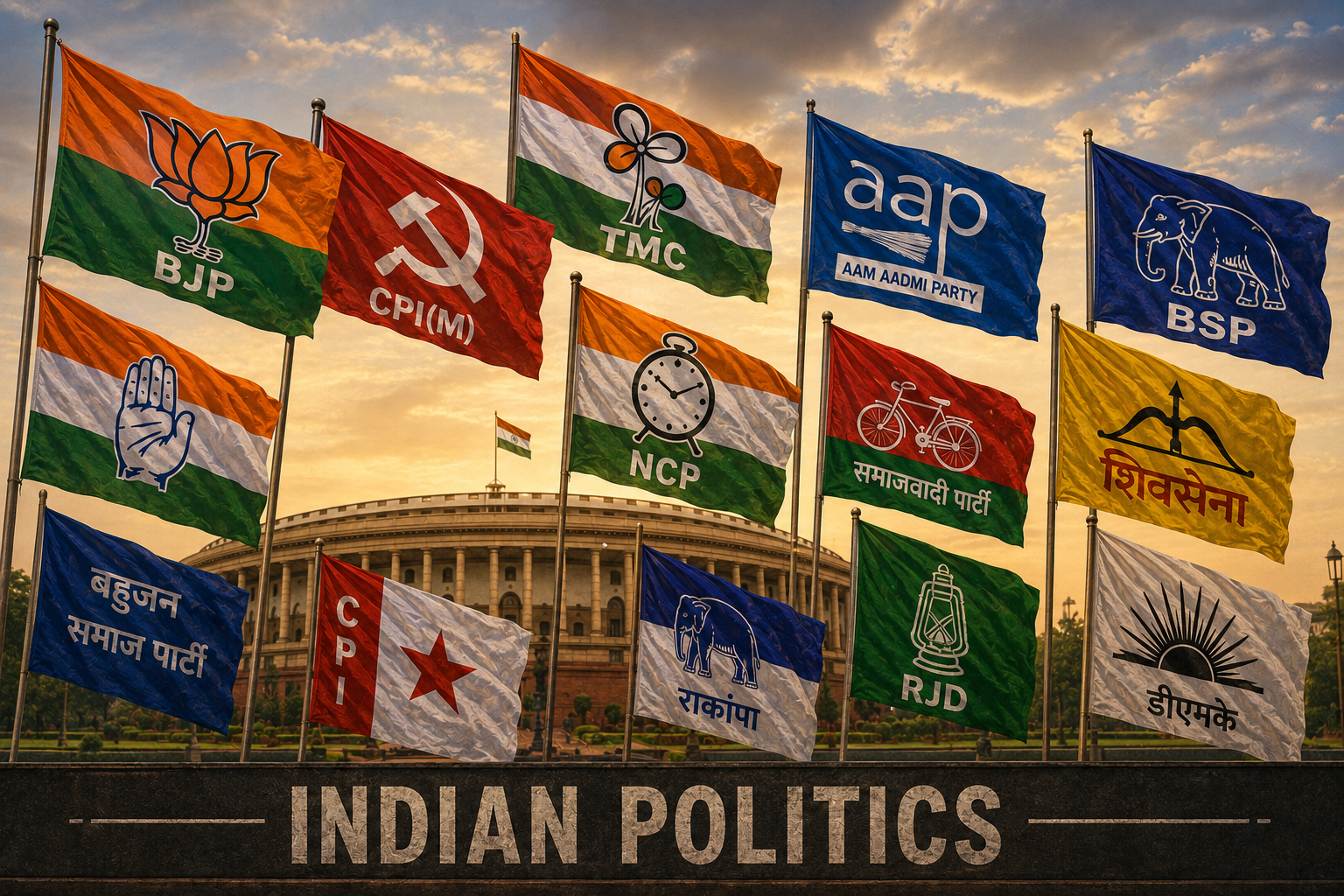
Karnataka Home Minister Priyank Kharge has called on the Rashtriya Swayamsevak Sangh (RSS) to register as a legal entity and disclose its financial and operational details. This demand, which the RSS chief Mohan Bhagwat has dismissed as politically motivated, marks a significant push by the Congress party for transparency and accountability from the century-old organization. Kharge argues that an entity of the RSS's scale and influence should adhere to the same legal standards as other organizations and citizens.
In-Depth Analysis
Bengaluru, India – Karnataka's Home Minister, Priyank Kharge, has initiated a major political discourse by formally demanding that the Rashtriya Swayamsevak Sangh (RSS) register as a legal entity and make its operations, finances, and office-bearers publicly transparent. This move, articulated in a letter dated June 13, 2026, to RSS chief Mohan Bhagwat, escalates a long-standing debate over the legal status of the influential Hindu nationalist organization as it approaches its centenary year.
Kharge's letter specifically sought clarification on the RSS's legal grounds for operating without formal registration, details of its office-bearers and authorized representatives, sources of donations and income, expenditure and assets, and information regarding its tax compliance. He emphasized that 'in a constitutional democracy, no organisation, however old, large or influential, can remain above scrutiny.' Citing the RSS's own annual report for 2025-26, Kharge highlighted the organization's vast footprint in Karnataka alone, with 4,127 daily 'shakhas,' 1,389 weekly 'milans,' and 60 monthly 'mandalis,' alongside numerous 'samajotsavas' and 'route marches' involving hundreds of thousands of participants. Given this extensive reach and influence, the Minister asserted that the RSS 'must be held to the highest standards of transparency, accountability and constitutional compliance.'
In response, RSS chief Mohan Bhagwat dismissed Kharge's demand as 'politically motivated' and 'nothing serious,' arguing that the RSS has 'nothing to hide' and operates openly. Bhagwat contended that registration is not legally mandatory for every association of citizens in India, drawing a parallel by stating, 'Hindu Dharma is not registered. Many things are not registered.' He further pointed out that the RSS had submitted its written constitution to the government in the 1950s or 1960s, which was accepted without a demand for registration, and that its existence has been repeatedly recognized by courts and governments, including through three past bans.
The Rashtriya Swayamsevak Sangh, founded in 1925 by Keshav Baliram Hedgewar, presents itself primarily as a cultural organization dedicated to promoting discipline, unity, and a sense of Hindu identity. However, it is widely recognized as the ideological parent body of the ruling Bharatiya Janata Party (BJP), with many key BJP leaders, including Prime Minister Narendra Modi, having deep roots in the RSS. The organization's informal structure, relying on 'swayamsevaks' (volunteers) and 'shakhas' (local branches), has often allowed it to operate outside the traditional frameworks of registered societies, trusts, or political parties.
Critics, including Kharge and other Congress leaders, argue that this unregistered status allows the RSS to evade legal and financial scrutiny that applies to other public organizations, NGOs, trusts, and companies. They question the sources of its significant funding, its expenditure, and its tax compliance, especially given its extensive activities and property holdings across the country. Historically, the RSS's legal status came under scrutiny in the 1970s during tax cases where it was recognized as a 'body of individuals,' with 'guru dakshina' (donations from workers) being exempt from tax. However, this did not mandate full registration. The organization adopted a formal constitution in 1949 as a condition for lifting a ban imposed after Mahatma Gandhi's assassination, affirming its loyalty to the Indian Constitution, yet it largely maintained its informal operational style.
This renewed demand for registration by the Congress government in Karnataka is seen by some as a significant shift in strategy, moving beyond ideological criticism to challenging the RSS's foundational legal ambiguities. Congress leaders like B.K. Hariprasad and Yathindra Siddaramaiah have echoed Kharge's sentiments, asserting that no organization, regardless of its perceived cultural or patriotic role, should be exempt from laws governing registration and financial accountability. They stress that equating an organization with a religion to avoid legal requirements is 'flawed and absurd.' The debate highlights a fundamental tension between the RSS's self-perception as a voluntary cultural body and its immense socio-political influence, prompting a wider discussion on transparency and accountability for all large organizations within India's democratic framework.
How do you feel about this story?
Discussion
No comments yet. Be the first to share your thoughts.
Join the discussion
Sign in to share your thoughts on this story.