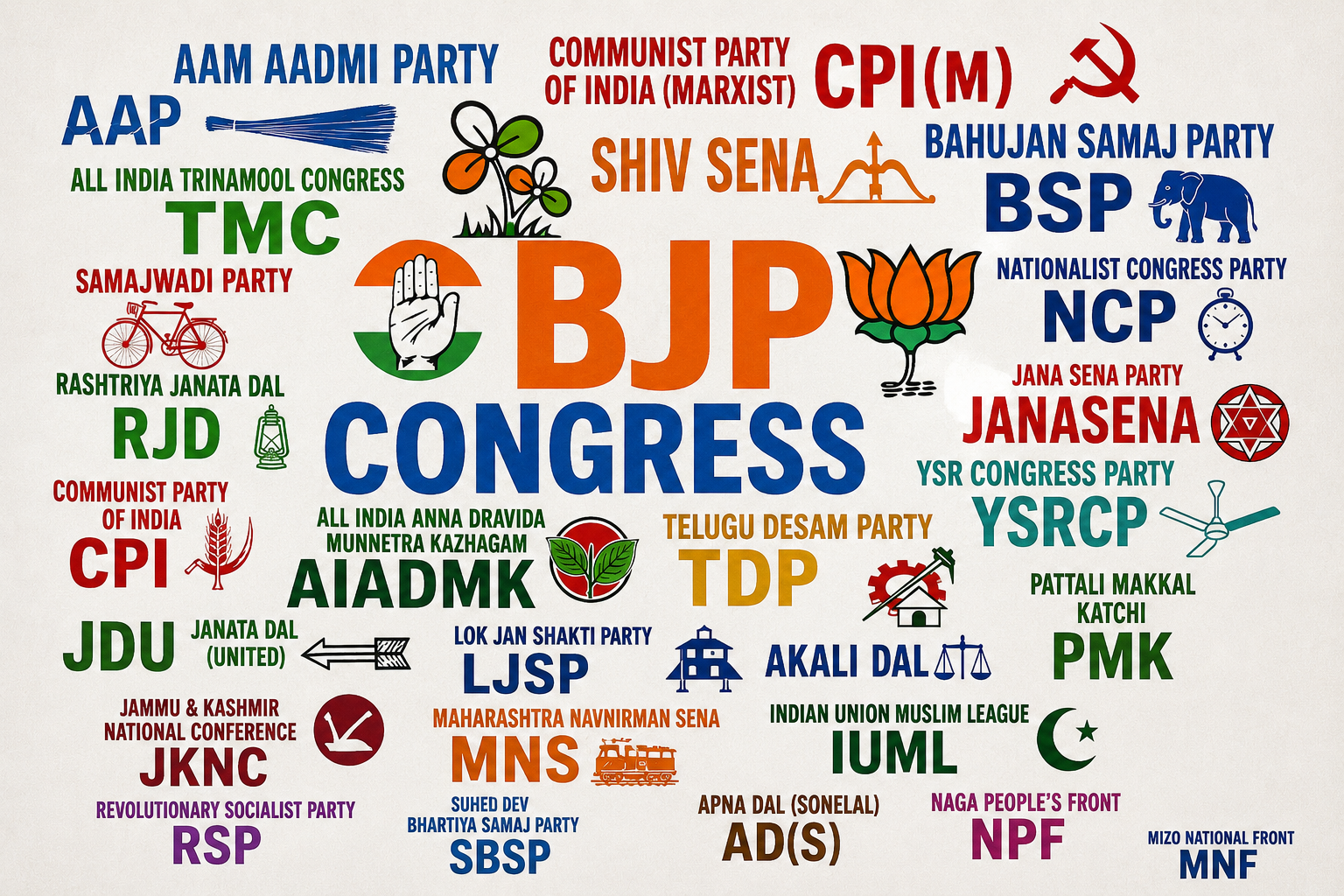

BNN Summary
Twenty rebel Trinamool Congress MPs have strategically opted to merge with the obscure Tripura-based National Congress Party of India (NCPI). This calculated move allows them to circumvent anti-defection laws, preserve their collective parliamentary strength, and pledge support to the National Democratic Alliance (NDA). The decision highlights sophisticated political maneuvering aimed at legal bypass and strategic realignment within India's political landscape.
In-Depth Analysis
Asignificant political realignment is underway as twenty rebel Members of Parliament (MPs) from the Trinamool Congress (TMC) have made a strategic decision to align themselves with the National Congress Party of India (NCPI), a lesser-known political entity based in Tripura. This intricate maneuver is reportedly designed to circumvent parliamentary anti-defection laws, consolidate their collective political strength, and, critically, extend their support to the ruling National Democratic Alliance (NDA).
This move by a substantial faction of TMC MPs represents a major development in the country's political arena, reflecting profound internal discord within the Trinamool Congress. Instead of opting for individual defections, which would almost certainly trigger disqualification under India's rigorous anti-defection legislation, these MPs have chosen a collective merger with a smaller, regional party. The strategy is predicated on specific provisions outlined in the Tenth Schedule of the Indian Constitution. This constitutional schedule allows for the merger of political parties under certain conditions, primarily stipulating that at least two-thirds of the members of a legislative party must agree to the merger to avoid disqualification. By selecting the NCPI, a party with a minimal national footprint, the dissident faction intends to present their shift as a legitimate party merger, thereby safeguarding their parliamentary seats and maintaining their unified political voice within the legislative chambers.
This calculated approach distinctly prioritizes political expediency over traditional party loyalty, effectively exploiting legal nuances within the existing anti-defection framework. The overarching objective is to bypass the immediate parliamentary obstacles that would otherwise challenge their continued tenure as MPs in either the Lok Sabha or Rajya Sabha. By formally merging with the NCPI, these MPs can assert a collective identity separate from the TMC while continuing to serve as elected representatives. This mechanism enables them to support the NDA from within a recognized parliamentary group, thereby augmenting the ruling alliance's numerical strength without individual members confronting the severe threat of disqualification. The 'little-known' status of the Tripura-based NCPI is likely a pivotal factor in its selection, as its potential lack of an extensive, established party structure or significant existing parliamentary presence could simplify the complexities typically associated with such a large-scale merger. This tactical choice vividly illustrates a sophisticated comprehension of India's parliamentary regulations and a willingness to leverage these rules for strategic political advantage, underscoring that 'political calculations' indeed hold 'supreme' in their ultimate decision-making process.
For the Trinamool Congress, this defection, disguised as a merger, constitutes a significant setback. It signals a considerable erosion of its parliamentary strength and raises pressing questions regarding the party's internal cohesion and the effectiveness of its leadership. This development further complicates the TMC's role as a formidable opposition force in national politics. Conversely, for the National Democratic Alliance, the acquisition of allegiance from twenty additional MPs, even if facilitated through an intermediary party like NCPI, provides a valuable numerical advantage. This influx of support could potentially streamline legislative procedures and reinforce the NDA's overall position within the Parliament. This meticulously engineered defection, presented as a legitimate merger, establishes a notable precedent for how future political realignments might be executed, particularly by factions seeking to switch allegiances without incurring personal penalties. The core focus remains on preserving collective strength and achieving broader political objectives through intricate interpretations and applications of existing legal statutes.
In conclusion, the alignment of the rebel TMC MPs with the Tripura-based NCPI is a prime example of strategic political engineering designed to navigate and circumvent anti-defection laws. This move effectively allows the MPs to preserve their collective strength in Parliament and offer crucial support to the NDA, thereby highlighting the complex interplay of political ambition and astute legal strategizing that characterizes contemporary Indian politics.
How do you feel about this story?
Discussion
No comments yet. Be the first to share your thoughts.
Join the discussion
Sign in to share your thoughts on this story.