BNN Summary
The Congress party has launched a scathing attack on Union Home Minister Amit Shah, accusing him of 'wrecking' Indian democracy and conducting an 'onslaught' on the Opposition. The party alleges that Shah is enticing elected representatives, particularly those with strong anti-BJP mandates, to switch allegiance to the ruling party with 'mind-boggling incentives.' These actions are purportedly an attempt to compensate for a 'humiliation' in the Lok Sabha regarding the Delimitation Bills.
In-Depth Analysis
The Indian National Congress on Wednesday accused Union Home Minister Amit Shah of orchestrating a systematic campaign to undermine the nation's democratic fabric and weaken opposition parties. Jairam Ramesh, Congress general secretary in-charge communications, alleged that Shah is engaged in an 'onslaught' on the Opposition and is actively 'wrecking Indian democracy' through political defections and inducements.
Ramesh stated that these alleged actions by Home Minister Shah are a direct attempt to 'compensate for his humiliation' in the Lok Sabha on April 17, 2026. This refers to an instance when the government failed to secure the passage of the Constitution Amendment (Delimitation) Bills, a significant legislative setback.
The Congress leader further claimed that Shah's political strategy involves 'allurements enticing' a significant number of elected representatives to switch allegiance to the Bharatiya Janata Party (BJP). These individuals, according to Ramesh, had been elected just two years prior on strong anti-BJP platforms, and the incentives reportedly extended to them are 'mind-boggling.'
In a sharp swipe, Ramesh likened the Home Minister's alleged campaign to the mutual funds industry, stating it is 'well lubricated' and 'offers various schemes and products suited to individual needs.' He accused Shah of running a 'wholly cynical campaign' designed to fragment the Opposition, adding that 'there are absolutely no limits to his depravity.'
The accusations by Congress are not isolated, coming amid broader concerns about the health of Indian democracy. Critics argue that legislative capture by a single dominant party can be detrimental to a nation's democracy, eroding checks and balances, decreasing executive accountability, and weakening the opposition. Historically, India's democracy, while robust in its constitutional framework, has faced challenges related to the concentration of power and the influence of money in politics.
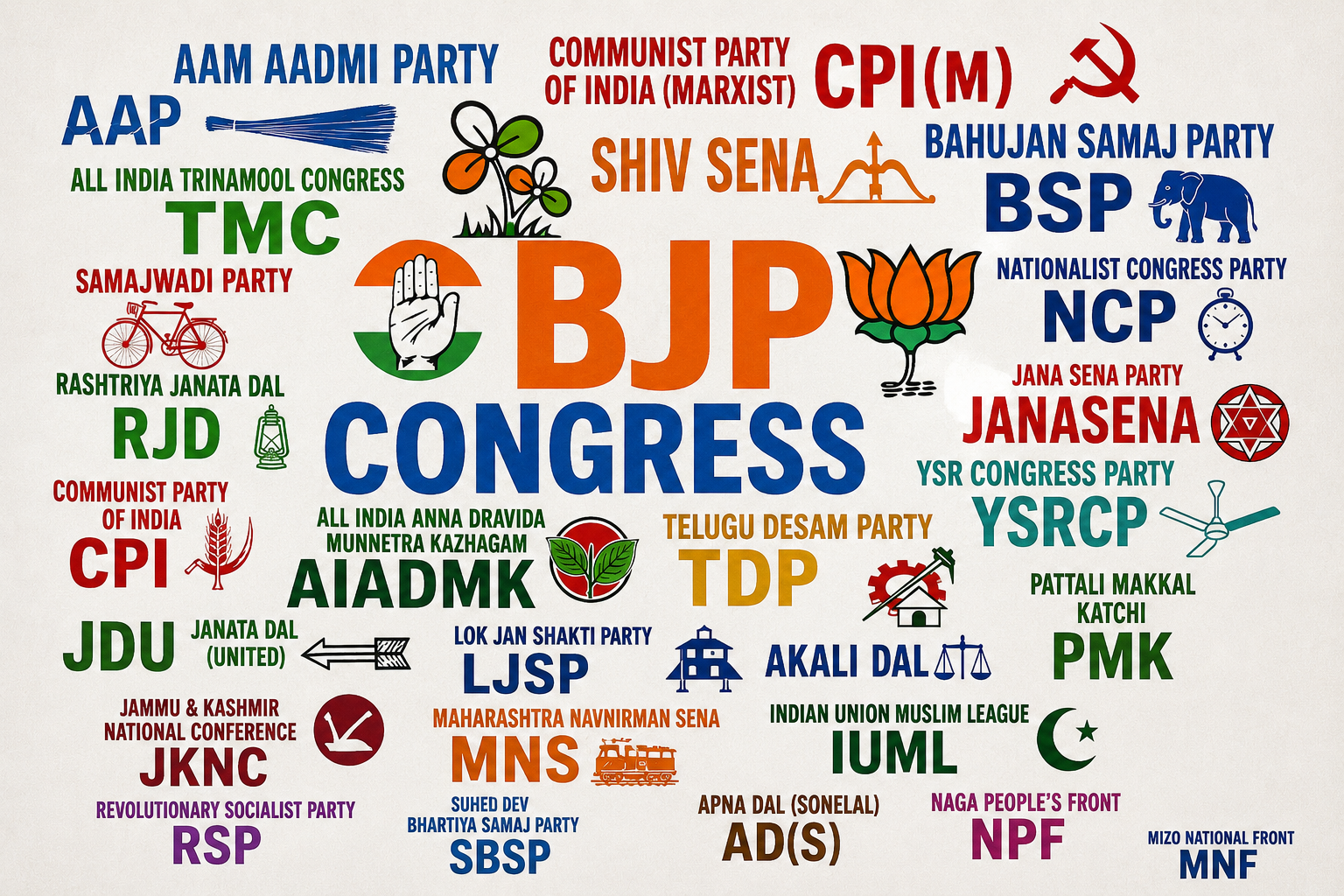
Recent political developments have intensified these concerns. Speculation is rife about potential defections from opposition parties, including the Shiv Sena (UBT) in Maharashtra and the Trinamool Congress (TMC). Shiv Sena (UBT) leader Sanjay Raut publicly alleged that attempts were being made to 'lure MPs from the state,' claiming that 'an advance of Rs 15 crore' was being offered to buy MPs from Maharashtra.
Furthermore, reports have indicated that dissident TMC MPs were considering meeting the Lok Sabha Speaker to claim recognition as the 'real TMC,' with one rebel MP claiming support from 19 Lok Sabha members. More than two-thirds of TMC's MLAs had reportedly broken away previously, securing recognition as the principal opposition bloc in the West Bengal assembly. The Congress has also accused Shah of masterminding a Trinamool 'split' and merger bid to secure a two-thirds majority for the NDA in the Lok Sabha.
These events underscore a continuing narrative of political maneuvering and attempts to reshape the parliamentary landscape. The Congress asserts that Shah's 'evil designs' to engineer a two-thirds majority for the BJP in the Lok Sabha by breaking opposition parties will not succeed, calling it a 'complete mockery of democracy.' The opposition party maintains that such tactics undermine the democratic ideal of fair competition and reduce the diversity of representation, especially when coupled with the rising costs of election campaigns and voter expectations for monetary incentives.
The Congress emphasized that a strong opposition is vital for a healthy democracy, serving as a critical check on the ruling party's power and ensuring accountability. The current political climate, marked by these serious allegations, highlights ongoing tensions within India's multi-party democratic system and the continuous struggle over political influence and power. Despite the allegations and the perceived challenges to democratic institutions, the Congress has expressed confidence that the BJP's broader political objective of weakening the opposition will ultimately fail.
How do you feel about this story?
Discussion
No comments yet. Be the first to share your thoughts.
Join the discussion
Sign in to share your thoughts on this story.