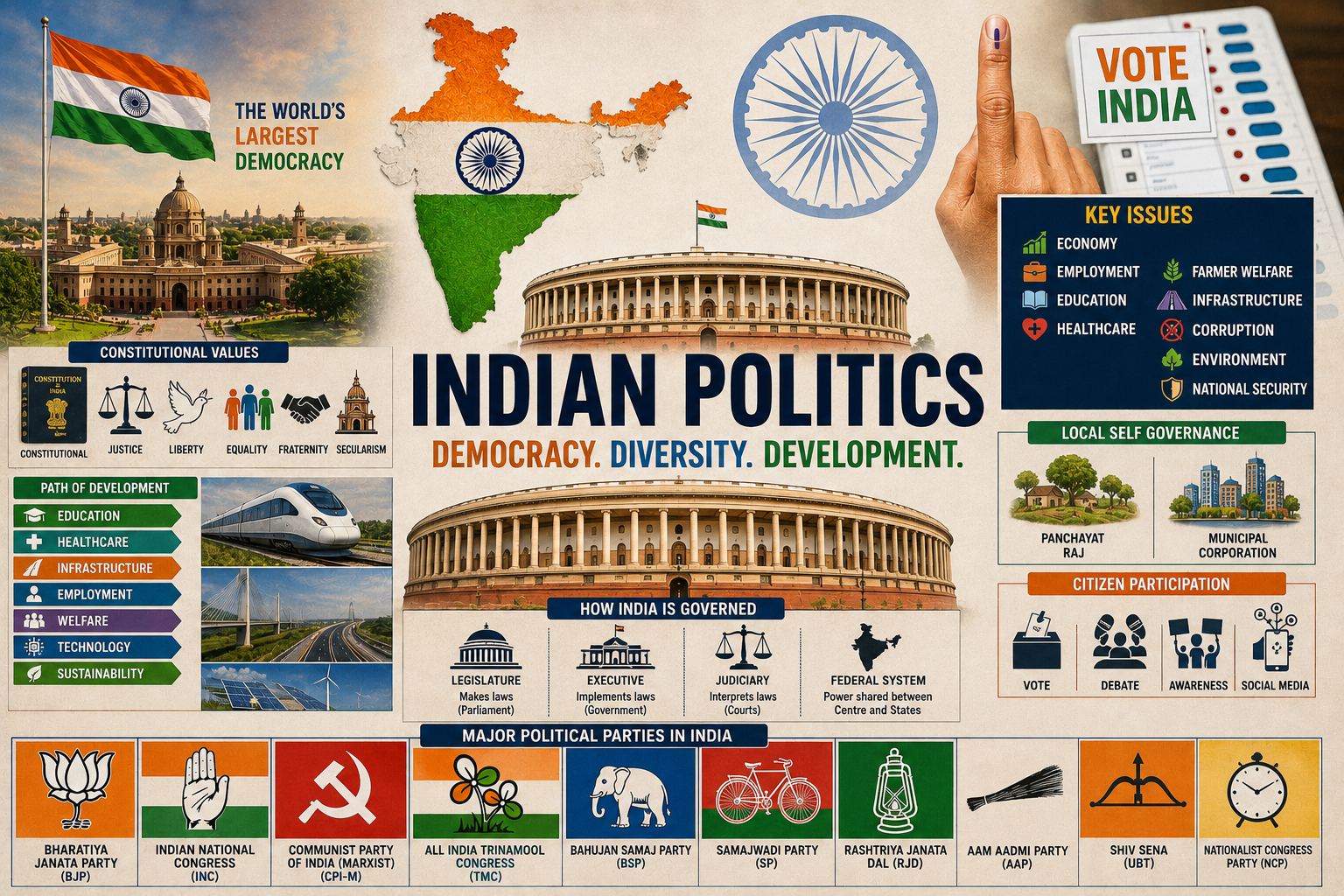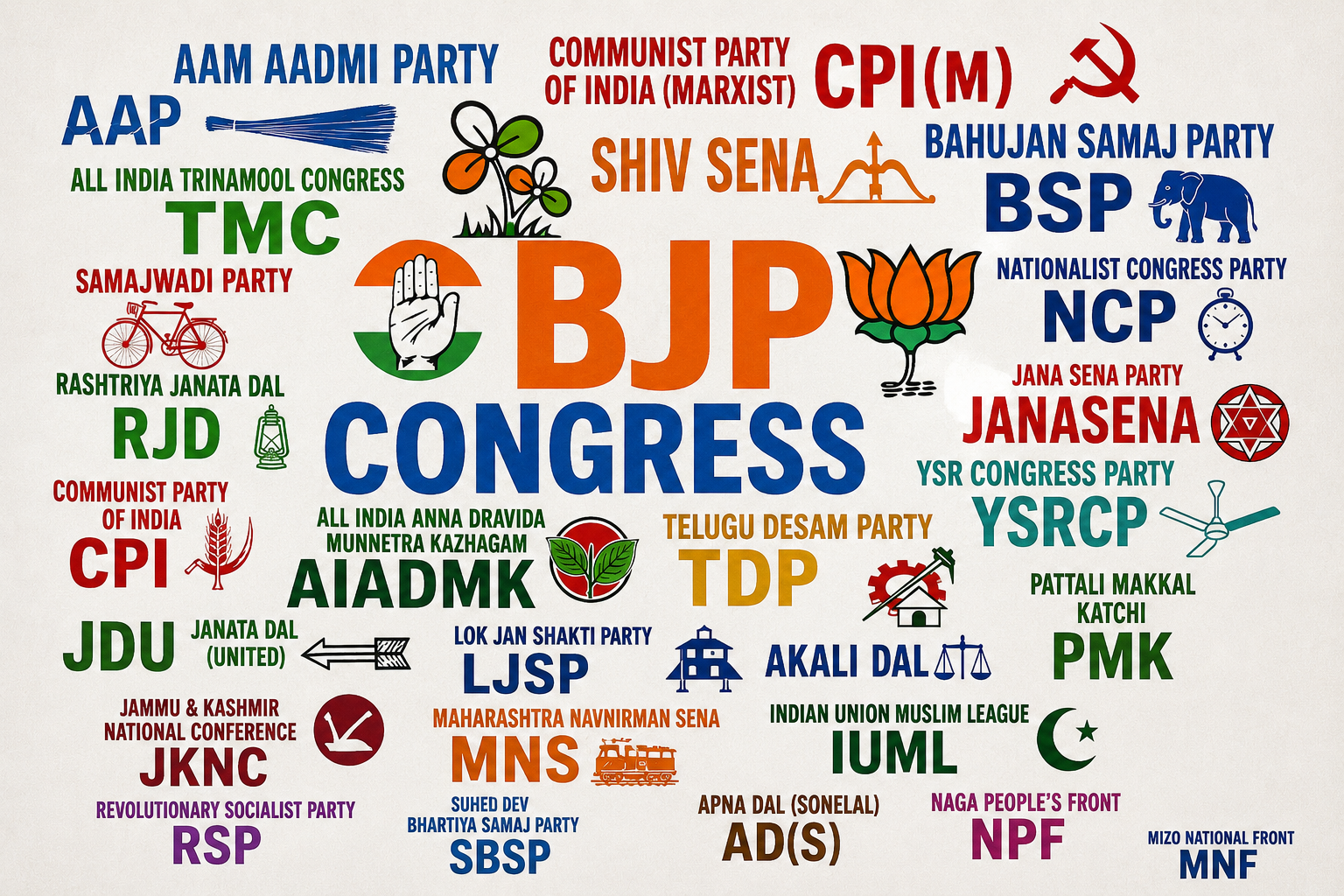

Image: Wikimedia
BNN Summary
Alittle-known National Conscience Party of India (NCPI) has suddenly gained national prominence after 20 dissident Trinamool Congress (TMC) MPs merged with it, pledging support to the NDA government. This move marks a significant internal crisis for the TMC and positions the NCPI to potentially become the NDA's second-largest ally, dramatically altering the political landscape.
In-Depth Analysis
The political landscape in India has witnessed a significant and unexpected shift with the emergence of the National Conscience Party of India (NCPI) from relative obscurity into the national spotlight. This little-known political outfit, which had struggled to make a substantial impact in the 2023 Tripura assembly elections, has suddenly found itself at the epicentre of a major political realignment after 20 rebel Members of Parliament (MPs) from the Trinamool Congress (TMC) announced their merger with the NCPI. This development not only catapults the NCPI into national prominence but also signals a deepening crisis within the TMC and a potential strengthening of the ruling National Democratic Alliance (NDA) government.
The dramatic announcement saw the 20 disgruntled TMC MPs officially declaring their allegiance to the NCPI and, crucially, expressing their unequivocal support for the NDA government. This move has been interpreted by political observers as a profound blow to the TMC, raising serious questions about internal cohesion and leadership control within the party. BJP's Karuna Sagar was quick to capitalize on the situation, claiming that the merger unequivocally reflects a 'growing dissent and crisis' within the TMC ranks. Sagar urged the TMC leadership to provide immediate clarity on the situation, highlighting the perceived instability plaguing the West Bengal-based party. The defection of such a large contingent of MPs suggests a deep-seated dissatisfaction that has likely been festering for some time, now brought to the public fore by this decisive action.
For the NCPI, this turn of events represents a meteoric rise. Previously considered a fringe player, barely registering on the national political radar and having performed poorly in regional elections like the 2023 Tripura polls, the party is now being discussed as a potentially pivotal force. Analysts are even speculating that the NCPI could swiftly become the NDA's second-largest ally, a remarkable transformation for a party that was virtually unknown just weeks ago. This sudden influx of experienced parliamentarians not only boosts the NCPI's numerical strength in the Lok Sabha but also provides it with a national platform and a voice it previously lacked. The party's identity, which was reportedly built around an 'anti-turncoat' stance, now faces scrutiny as it embraces politicians who have switched allegiances. This apparent contradiction will likely be a point of discussion as the NCPI navigates its newfound national role.
The implications for the Trinamool Congress are severe. The departure of 20 MPs represents a significant erosion of its parliamentary strength and morale. This mass defection is bound to trigger intense introspection within the party and could potentially lead to further internal strife if not addressed effectively by the leadership. The BJP's strong reaction, particularly Karuna Sagar's pointed remarks, underscores the strategic advantage gained by the ruling alliance. For the NDA, the addition of 20 MPs, even if indirectly through an allied party, enhances its legislative majority and provides additional stability, especially in the context of upcoming legislative agendas or potential parliamentary challenges. The NCPI's new position as a key partner could grant it considerable leverage within the alliance, potentially influencing policy decisions or seat-sharing arrangements in future elections.
This political upheaval also casts a spotlight on the broader dynamics of Indian politics, where smaller parties can sometimes play disproportionately large roles, especially in coalition governments or multi-party alliances. The NCPI's journey from struggling in state elections to potentially becoming a significant national player overnight demonstrates the fluid and often unpredictable nature of political allegiances and power shifts. The immediate future will likely see increased scrutiny on the NCPI's agenda, its ideological alignment with the NDA, and the specific reasons cited by the TMC defectors for their move. Furthermore, the TMC's response to this significant challenge will be closely watched, as it attempts to mitigate the damage and prevent further erosion of its base. The unfolding events surrounding the NCPI and the TMC defectors promise to reshape political calculations and alliances across the country, making this a pivotal moment in contemporary Indian political history.
How do you feel about this story?
Discussion
No comments yet. Be the first to share your thoughts.
Join the discussion
Sign in to share your thoughts on this story.