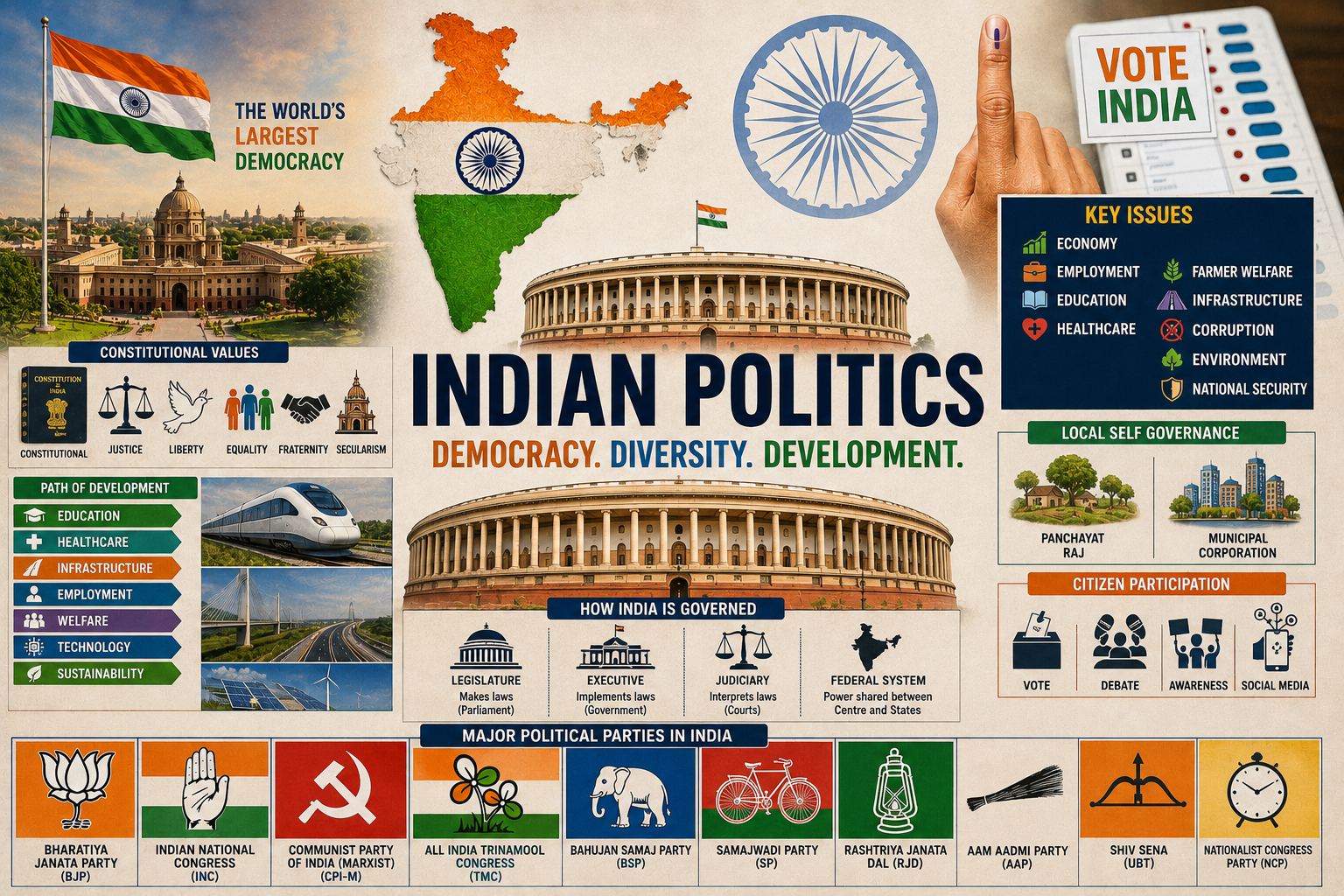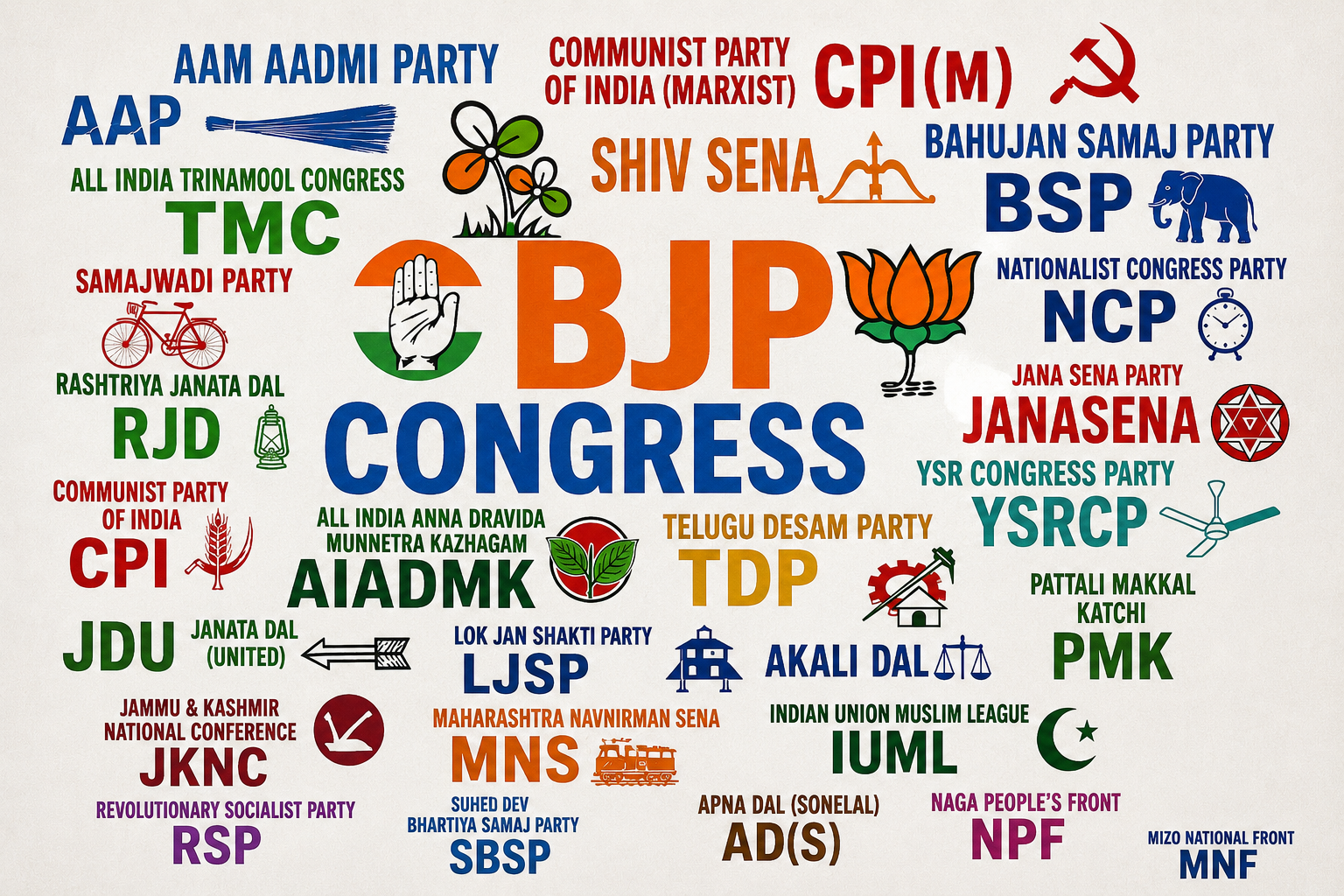

Image: Wikimedia
BNN Summary
Former Rajasthan Chief Minister Ashok Gehlot has vehemently accused the ruling BJP of exploiting religion for political gain and fostering societal polarisation. Speaking in Jaipur, Gehlot asserted that if former Prime Minister Indira Gandhi were in power today, she would have banned a party engaging in such practices. He also highlighted growing pressure on democratic institutions and advocated for Rahul Gandhi as the unified leader of the INDIA bloc to counter the BJP's influence.
In-Depth Analysis
Former Rajasthan Chief Minister and senior Congress leader Ashok Gehlot launched a scathing critique against the ruling Bharatiya Janata Party (BJP) on Sunday, accusing it of actively attempting to provoke Hindutva forces and deepen religious polarisation across the country. Speaking at an event in Jaipur, Gehlot unequivocally stated that such political tactics, which he claims leverage religion for electoral benefit, would have met with severe action from former Prime Minister Indira Gandhi, going so far as to suggest she 'would have banned' such a party if she were in power today.
Gehlot's strong remarks underscore a deep concern within the opposition regarding the BJP's ideological approach, which he described as 'dangerous' when referring to the BJP and its ideological parent, the Rashtriya Swayamsevak Sangh (RSS). He emphasized that the Constitution of India grants equal rights to all religions and expressly forbids the use of religion as a political instrument. The former Chief Minister alleged that the BJP is systematically mobilising people in the name of Hindutva to secure electoral victories, thereby straying from the foundational constitutional principle of equal rights for all faiths.
The Congress veteran did not limit his accusations to religious politics alone. He also claimed that democratic institutions within the country are under immense pressure. Gehlot pointed fingers at the Central government, accusing it of misusing central agencies like the Enforcement Directorate (ED), Central Bureau of Investigation (CBI), and Income Tax Department to target and suppress political rivals. Furthermore, he alleged that the Election Commission itself was functioning as an 'agent' of the BJP, a charge that raises serious questions about the impartiality of electoral processes. These assertions contribute to a broader narrative from the opposition about the weakening of democratic safeguards and voting rights, which Gehlot warned would disproportionately impact the poorer sections of society.
To contextualise his invocation of Indira Gandhi, it is important to recall her strong stance on secularism and national unity. Indira Gandhi, who served as Prime Minister from 1966 to 1977 and again from 1980 to 1984, was known for her firm resolve against forces perceived as threatening India's secular fabric and national integration. While her tenure also included the controversial declaration of an Emergency in 1975 to address 'internal disturbance' amidst political instability and economic crises, her public rhetoric consistently championed secularism and opposed divisions based on religion or caste. Sonia Gandhi, then Congress President, notably stated in 2017 that Indira Gandhi 'fought for secularism, against all those forces seeking to divide the Indian people on lines of religion and caste,' and that for her, 'there was only one religion – that all Indians were equal children of the motherland.' This historical context provides a powerful backdrop for Gehlot's claim that Indira Gandhi would have taken stringent measures against a party promoting religious polarization.
Beyond his critique of the BJP's current governance, Gehlot also offered a strategic vision for the opposition. He asserted that the political contest in India should no longer be viewed as 'Congress versus all,' but rather as 'BJP versus all.' In this restructured political landscape, he strongly advocated for projecting Rahul Gandhi as the unified face of the opposition's INDIA bloc. Gehlot urged regional parties to 'wholeheartedly accept Rahul Gandhi as their leader,' arguing that a clear message of unified leadership is crucial to shifting voting patterns and protecting democracy in India. He praised Rahul Gandhi as a 'courageous leader' who is unafraid to confront Prime Minister Modi and raise critical national and international issues, despite a perceived lack of answers from the government. Gehlot's statements reflect an ongoing effort by the Congress to consolidate opposition forces and present a formidable, united front against the BJP-led National Democratic Alliance (NDA) in the upcoming electoral battles.
In his broader criticism, Gehlot also questioned the BJP's commitment to inclusivity, noting the absence of Muslim BJP Members of Parliament in the Lok Sabha and alleging that prominent Muslim leaders like Mukhtar Abbas Naqvi and Shahnawaz Hussain have been sidelined within the party. He further accused the BJP of selectively invoking national icons for political purposes while disregarding their core values. These comprehensive remarks from Ashok Gehlot paint a picture of a deeply fractured political environment, where ideological battles over secularism, democratic values, and leadership are expected to intensify.
How do you feel about this story?
Discussion
No comments yet. Be the first to share your thoughts.
Join the discussion
Sign in to share your thoughts on this story.