BNN Summary
Avideo of BJP MP Tejasvi Surya defending Prime Minister Narendra Modi's prolonged absence from press conferences has gained significant traction online. Surya argued that traditional press conferences are 'redundant' in the age of 24/7 social media, where leaders can communicate directly with citizens. This defense comes amid ongoing criticism from opposition parties and media organizations regarding the Prime Minister's communication style, highlighting a broader debate on democratic accountability and media engagement in India.
In-Depth Analysis
Arecent video featuring Bharatiya Janata Party (BJP) Member of Parliament Tejasvi Surya has ignited a fresh round of debate across social media and political circles. In the viral clip, Surya is seen defending Prime Minister Narendra Modi's widely noted practice of not holding open press conferences throughout his tenure, which now spans over a decade. The Bengaluru South MP asserted that traditional press conferences have become 'redundant' in the modern era of constant digital engagement.
Surya's remarks were made during an interaction with students at a college in Bengaluru. When questioned about the Prime Minister's avoidance of press conferences despite India being the world's largest democracy, Surya labeled it a 'great question to start with.' He then elaborated, stating, 'Don't you think — like how I said — speeches are so yesterday! In the age of 24x7 social media, where I can talk to my voters directly, the purpose of a press conference is… where you have certain barrier between the leader and the people which comes between you. It is redundant.' He further emphasized that 'it's not that the PM is not communicating. The PM communicates every day.'
This explanation by the BJP MP, while resonating with some who advocate for direct digital communication, has drawn sharp criticism from opposition leaders and media watchdogs. Congress spokesperson Supriya Shrinate, among others, shared the video on social media platform X (formerly Twitter), characterizing the exchange as 'Gen Z having stumped' Surya. The Editors Guild of India (EGI) has previously expressed strong concern over Prime Minister Modi's communication approach, calling it 'embarrassing' when foreign journalists faced stand-offs with Indian officials for attempting to ask questions during the Prime Minister's visits abroad. The EGI has highlighted that it is a 'regrettable fact' that Prime Minister Modi has not held a single open press conference since his government took office in May 2014, urging the government to cease treating the media as an 'adversary.'
Indeed, the last full-fledged, open-ended press conference by an Indian Prime Minister was held by Dr. Manmohan Singh on January 3, 2014, in New Delhi. During his ten years in office (2004-2014), Dr. Singh reportedly interacted with journalists over a hundred times, addressing difficult questions on various national and international issues. In stark contrast, Prime Minister Modi has not held a comparable open-ended press conference in India where journalists could ask unscripted questions and receive direct answers.
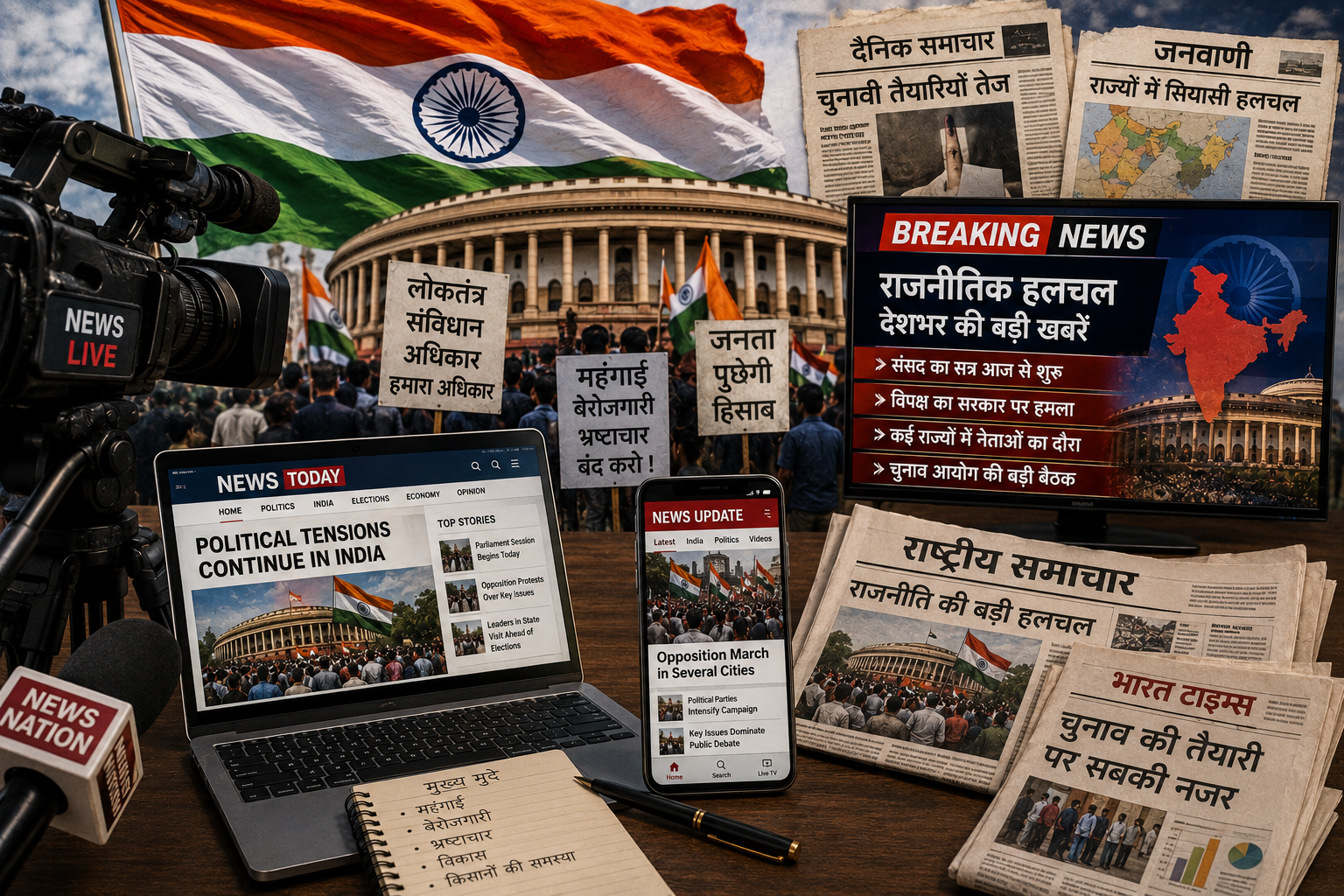
Critics argue that the absence of regular press conferences undermines democratic accountability and transparency. They view press conferences as crucial forums for journalists to ask questions on behalf of citizens, seek clarifications on government policies, and hold leaders in power responsible. The office of the Prime Minister carries immense authority, and with that comes an equally great obligation to answer questions, as press conferences serve as powerful symbols of democratic accountability where transparency meets scrutiny.
Prime Minister Modi's communication strategy has largely relied on alternative channels. These include public speeches, parliamentary discussions, social media platforms, curated interviews with specific journalists, and his monthly radio program 'Mann Ki Baat.' 'Mann Ki Baat,' launched in October 2014, uses the traditional medium of radio, combined with modern technologies like television, internet, and social media, to reach the masses, even in India's remotest parts. Supporters argue that these methods enable the Prime Minister to effectively convey government policies and connect with citizens across the country, asserting that governance should be judged primarily on performance and results rather than the frequency of press conferences.
However, opponents contend that these alternative communication methods often lack the spontaneous, unscripted scrutiny inherent in open press conferences. Carefully choreographed interviews, for instance, have been criticized for featuring 'ridiculous questions' that resemble public relations exercises rather than genuine journalistic inquiry. The issue also surfaced during PM Modi's visit to Norway in May 2026, where a Norwegian journalist, Helle Lyng Svendsen, publicly asked, 'Prime Minister Modi, why don't you take some questions from the freest press in the world?' as he walked away without responding. Indian officials later clarified that the event was a pre-arranged joint media statement, not an open press conference, and leaders are not obligated to take questions in such diplomatic briefings.
The debate over the Prime Minister's media interactions highlights differing views on the role of media in a democracy. While some consider regular press conferences a necessary tool for accountability and transparency, others believe modern communication methods can achieve similar goals. Organizations like Reporters Without Borders (RSF) have pointed to 'violence against journalists,' concentrated ownership, and increasing political alignment among media outlets, ranking India 157 out of 180 countries in the 2026 World Press Freedom Index, placing it in the 'very serious' category. This ongoing discussion reflects broader questions about democratic practices, media freedom, and the crucial relationship between political leaders and the press in the world's largest democracy.
How do you feel about this story?
Discussion
No comments yet. Be the first to share your thoughts.
Join the discussion
Sign in to share your thoughts on this story.