BNN Summary
Communist Party of India (Marxist) General Secretary M.A. Baby has called for honest self-assessment and strengthened unity among all constituent parties of the opposition INDIA bloc. The appeal underscores the critical need for cohesion to effectively challenge the ruling Bharatiya Janata Party (BJP). This comes amidst ongoing efforts to consolidate opposition forces and present a formidable front in India's complex political landscape.
In-Depth Analysis
The Communist Party of India (Marxist) (CPI(M)) has issued a significant call to action for the Indian National Developmental Inclusive Alliance (INDIA) bloc, emphasizing the urgent need for enhanced unity and honest introspection among its diverse member parties. M.A. Baby, the General Secretary of the CPI(M), stated on Friday that all constituent parties must undertake a genuine and rigorous self-assessment, fostering a stronger collective to effectively challenge the Bharatiya Janata Party (BJP). This statement highlights the persistent challenges and strategic imperatives facing India's primary opposition alliance.
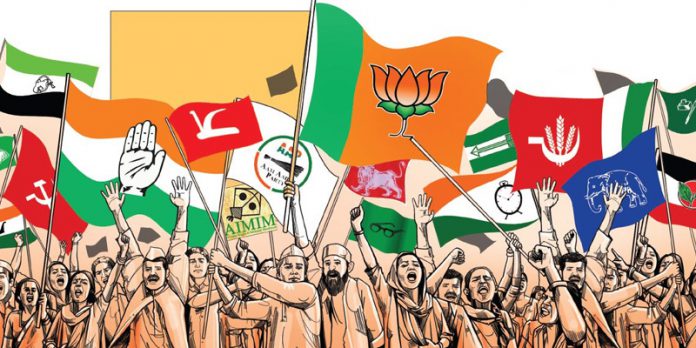
The INDIA bloc, formed with the explicit goal of consolidating anti-BJP votes and presenting a united front in national elections, comprises a broad spectrum of regional and national parties. Its inception was driven by the recognition that a fragmented opposition often benefits the incumbent, allowing the BJP to leverage its robust organizational machinery and popular appeal. However, the alliance has, from its very beginning, grappled with inherent complexities arising from differing ideological stances, regional rivalries, and competing leadership ambitions among its members. The call for 'honest' self-assessment by the CPI(M) leader points directly to these internal fissures, suggesting that superficial agreements are insufficient for sustained political impact.
Historically, opposition alliances in India have often found success when presenting a cohesive narrative and clear alternative vision to the electorate. Conversely, internal discord and a lack of unified purpose have consistently undermined their efforts. M.A. Baby's remarks underscore the CPI(M)'s view that a truly effective opposition cannot merely be a collection of disparate parties but must evolve into a coherent political entity capable of articulating a shared agenda and strategy. This involves overcoming substantial hurdles, including difficult negotiations over seat-sharing arrangements in various states, which often become points of contention due to the overlapping electoral ambitions of alliance partners.
The political landscape in India remains dominated by the BJP, which has enjoyed significant electoral success in recent years. To counter this, the INDIA bloc needs to project an image of strength, stability, and credible governance. The CPI(M) believes that without fundamental unity, the alliance risks being perceived as fractured and less capable of delivering a stable government, which could deter voters looking for a strong alternative. The emphasis on 'strengthening unity' is thus not just about internal harmony, but also about building external credibility with the Indian populace.
Beyond electoral strategy, a robust and unified opposition plays a crucial role in a democratic system by holding the government accountable and advocating for diverse sections of society. For instance, recent reports by Human Rights Watch (HRW) have highlighted concerning practices where Indian authorities are allegedly forcibly expelling ethnic Bengali residents, predominantly Muslims from West Bengal, to Bangladesh without adhering to basic due process. Such issues often become flashpoints for human rights advocacy and democratic oversight, areas where a united opposition can amplify voices and demand accountability from the ruling establishment. A strong, unified INDIA bloc could provide a more effective platform for raising such critical concerns, ensuring that governmental actions are scrutinized and that the rights of all citizens are protected.
The path forward for the INDIA bloc is fraught with challenges, but the message from the CPI(M) is clear: genuine unity, born from honest dialogue and a willingness to overcome internal differences, is paramount. As India approaches future electoral cycles, the ability of the INDIA bloc to forge this unity will be a decisive factor in its capacity to offer a compelling and viable alternative to the entrenched power of the BJP, shaping the future trajectory of Indian politics.
How do you feel about this story?
Discussion
No comments yet. Be the first to share your thoughts.
Join the discussion
Sign in to share your thoughts on this story.