
Image: Wikimedia
BNN Summary
Jharkhand is gripped by intense political activity on the eve of elections for two Rajya Sabha seats, scheduled for June 18, 2026. With 28 first-preference votes required for victory, both the ruling INDIA bloc and the opposition NDA are engaged in frenzied lobbying, strategic meetings, and resort politics to ensure their candidates' success. Fears of cross-voting and horse-trading loom large as parties work to maintain their legislative flock.
In-Depth Analysis
Ranchi, Jharkhand – As the clock ticks down to the crucial Rajya Sabha elections on June 18, 2026, Jharkhand's political landscape is abuzz with frenzied activity. Both the ruling INDIA bloc and the opposition National Democratic Alliance (NDA) are leaving no stone unturned in their efforts to secure the two vacant Upper House seats, leading to a high-stakes battle marked by intensive lobbying, strategic resort stays, and meticulous mock polling sessions.
The elections for these two Rajya Sabha seats have drawn significant attention. One seat became vacant following the unfortunate demise of Jharkhand Mukti Morcha (JMM) co-founder Shibu Soren, a prominent figure in the state's political history. The second vacancy arises from the completion of the six-year term of Bharatiya Janata Party (BJP) member Deepak Prakash, set to conclude on June 21.
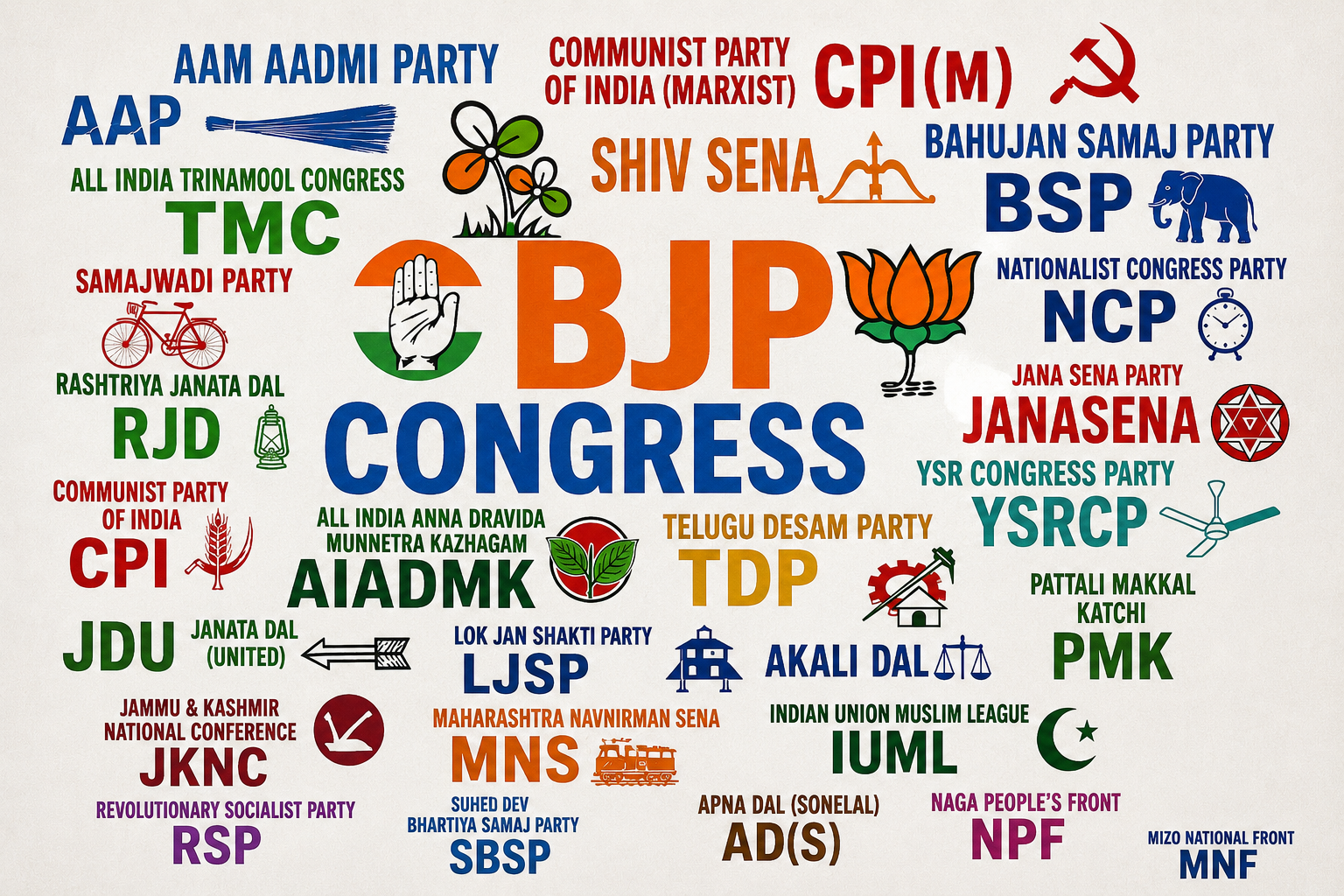
In the 81-member Jharkhand Legislative Assembly, a candidate requires a minimum of 28 first-preference votes to be declared victorious. The numerical strength of the political alliances plays a pivotal role in this indirect election process. The ruling INDIA bloc, a coalition comprising the JMM, Indian National Congress (INC), Rashtriya Janata Dal (RJD), and Communist Party of India (Marxist-Leninist) Liberation (CPI(ML)L), commands a formidable 56 legislators. Specifically, the JMM holds 34 MLAs, Congress has 16, RJD contributes 4, and CPI(ML)L adds 2. This combined strength theoretically positions the INDIA bloc to comfortably win both seats, needing exactly 28 votes per candidate.
Conversely, the opposition NDA has a significantly smaller contingent, with 24 MLAs. This includes 21 from the BJP, and one each from the All Jharkhand Students Union (AJSU) Party, Janata Dal (United) (JD(U)), and Lok Janshakti Party (Ram Vilas) (LJP-RV). The Jharkhand Loktantrik Krantikari Morcha (JLKM) holds one additional seat, making up the full 81-member Assembly.
Given the numbers, the INDIA bloc has fielded two candidates: Baijnath Ram from the JMM and Pranav Jha from the Congress. The BJP, despite lacking the requisite numbers on its own, is backing independent candidate Parimal Nathwani, adding a competitive edge to what would otherwise appear to be a straightforward victory for the ruling coalition. This three-way contest has consequently intensified the political manoeuvring.
To safeguard their legislators from potential cross-voting and ensure party discipline, both alliances have resorted to traditional 'resort politics' and rigorous training. The BJP-led NDA moved its 24 legislators to a hotel in Ranchi, reportedly the Radisson Blu, for strategy meetings ahead of the polls. Leader of Opposition Babulal Marandi and independent candidate Parimal Nathwani were present at these closed-door sessions, focusing on solidifying their support base. The strategy involves keeping the 'flock' together until polling day, with MLAs scheduled to travel directly from the hotel to the State Assembly for voting.
The ruling INDIA bloc, not to be outdone, held extensive strategy meetings and mandatory mock polling sessions at the Chief Minister's official residence. Chief Minister Hemant Soren personally convened these sessions to familiarize alliance legislators with the intricacies of the preferential voting system, aiming to eliminate any technical errors and prevent invalid votes. The initial demand by JMM legislators to contest both seats, asserting their numerical dominance, had caused some internal friction with the Congress. However, a consensus was eventually reached, with the JMM agreeing to a seat-sharing arrangement, fielding one candidate each from the JMM and Congress. The Congress, in turn, appointed senior leaders Bhupesh Baghel and Ajay Sharma as AICC observers for the polls to oversee the process and ensure smooth coordination.
One significant aspect of Rajya Sabha elections in India is the 'open ballot' system for party-affiliated MLAs, where they must show their marked ballot to an authorised party agent before casting it. This rule aims to enforce party discipline. However, independent MLAs are exempt from this and can cast a secret ballot. Crucially, the anti-defection law (Tenth Schedule of the Constitution) does not apply to Rajya Sabha elections. This means political parties cannot issue a whip to their members, making cross-voting a viable, albeit politically risky, option without attracting disqualification. This legal nuance fuels the intense lobbying efforts, especially by independent candidates like Parimal Nathwani, who are actively appealing to the 'conscience' of all 81 lawmakers for their support. The spectre of 'horse-trading' is a genuine concern, prompting the JMM to alert the Election Commission and request vigilance from central agencies regarding potential financial inducements or malpractices during the election process.
As June 18 approaches, all eyes remain fixed on Ranchi, where the outcome of these Rajya Sabha elections will not only determine the composition of the Upper House but also serve as a barometer of the alliances' internal cohesion and political dexterity in Jharkhand.
How do you feel about this story?
Discussion
No comments yet. Be the first to share your thoughts.
Join the discussion
Sign in to share your thoughts on this story.