
BNN Summary
D.K. Shivakumar has taken the helm as Karnataka's Chief Minister, marking a pivotal shift in the state's political landscape. Known as a seasoned troubleshooter for the Congress party, his ascension ushers in a new era that is expected to significantly alter the strategies and dynamics for both the Bharatiya Janata Party (BJP) and the Janata Dal (Secular) (JD(S)) as they navigate the evolving political currents. This change of guard signals a renewed focus on governance and electoral preparedness within the state.
In-Depth Analysis
The political arena in Karnataka has witnessed a significant transformation with the official commencement of the D.K. Shivakumar era. The veteran Congress leader, renowned for his exceptional political acumen and his critical role as the party's chief troubleshooter, has finally assumed the mantle of Chief Minister, signaling a profound recalibration of power dynamics within the state. His elevation to the top executive position is not merely a change in leadership; it represents a strategic realignment for the Congress party and poses considerable challenges and opportunities for its primary rivals, the Bharatiya Janata Party (BJP) and the Janata Dal (Secular) (JD(S)).
Shivakumar's journey to the Chief Minister's office has been a long and eventful one, characterized by his steadfast loyalty to the Congress and his unparalleled ability to navigate complex political crises. Often credited with keeping the party's flock together during periods of instability and defection attempts, his leadership style is seen as a blend of aggressive pragmatism and strong organizational skills. His track record includes successfully safeguarding MLAs from rival parties' poaching efforts, thereby earning him the 'troubleshooter' moniker. This reputation now positions him as a formidable force, capable of consolidating the party's recent electoral gains and delivering on its promises to the electorate.
For the Congress party, Shivakumar's appointment is a critical step towards solidifying its hold on Karnataka. Following a decisive mandate in the recent assembly elections, the party is keen to translate popular support into effective governance and long-term electoral success. Shivakumar's leadership is anticipated to bring stability, foster unity among various factions within the state unit, and provide a clear direction for implementing the party's manifesto. His administration will face the immediate challenge of fulfilling key electoral guarantees, managing the state's finances responsibly, and addressing the diverse needs of Karnataka's populace. The Congress will also look to leverage his strong public image and administrative experience to counter the opposition's narratives and prepare for future electoral contests, including the upcoming Lok Sabha elections.
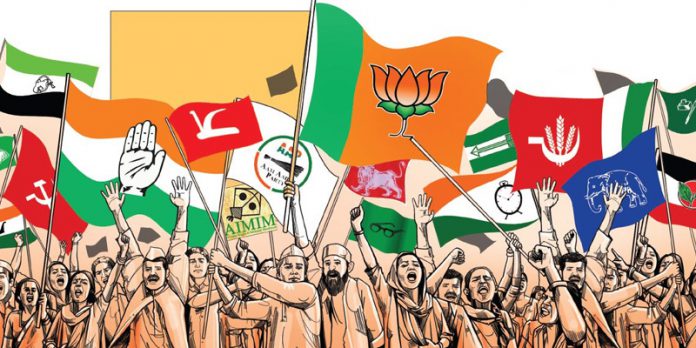
Conversely, the change of guard presents a moment of introspection and strategic recalibration for the BJP, which now finds itself in the opposition benches. Having previously held power, the BJP will need to redefine its role and devise effective strategies to challenge the new government. This includes holding the Shivakumar administration accountable for its policies and performance, highlighting any perceived shortcomings, and rebuilding its organizational strength at the grassroots level. The party will also need to address the factors that led to its electoral defeat, potentially involving a review of its leadership structure and outreach efforts. The BJP's ability to mount a credible opposition will be crucial in shaping the political discourse in Karnataka and regaining lost ground in the coming years.
The regional party, Janata Dal (Secular) (JD(S)), also faces a pivotal moment in this new political landscape. Historically, the JD(S) has often played the role of a kingmaker in Karnataka's coalition politics, leveraging its regional strength to influence government formation. However, its performance in the recent elections saw a significant reduction in its legislative strength, diminishing its bargaining power. Under Shivakumar's leadership, a Congress government with a clear majority is less likely to rely on the JD(S) for support, potentially pushing the regional party towards a more marginalized role. The JD(S) will need to strategize on how to maintain its relevance, protect its voter base, and potentially forge new alliances or consolidate its independent identity to ensure its long-term survival in a bipolar political environment dominated by the Congress and the BJP.
The ascension of D.K. Shivakumar thus inaugurates a dynamic period in Karnataka politics. His administration faces the complex task of fulfilling electoral promises, fostering economic growth, and ensuring inclusive development across the state. The political fortunes of the BJP and JD(S) will largely depend on their capacity to adapt to this new reality, craft effective opposition strategies, and reconnect with the electorate. The 'Shivakumar era' is poised to redefine political narratives, leadership dynamics, and electoral strategies in one of India's most politically significant states, setting the stage for intense political competition and policy debates in the years to come.
How do you feel about this story?