BNN Summary
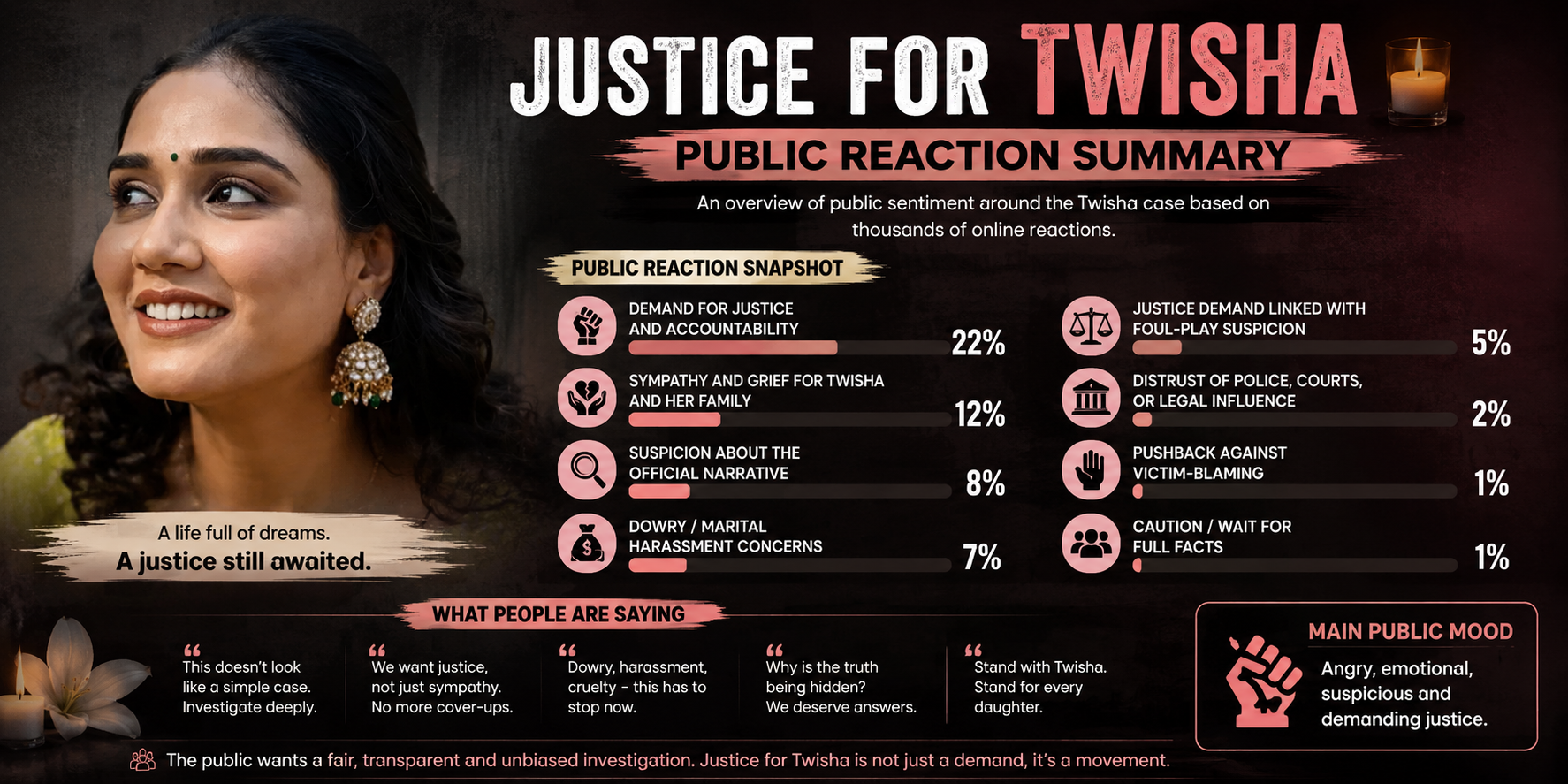
The Twisha case has once again exposed the deep fear, anger, and frustration people feel about women’s safety and the failure of justice systems. Public reaction shows that people are no longer treating such cases as private family matters -----they are demanding accountability, transparency, and real social change.
In-Depth Analysis
A Case That Triggered Nationwide Emotion
The Twisha case has created a strong emotional reaction across the country. People are not viewing it as just another individual tragedy; many see it as a symbol of a much larger problem faced by women after marriage. Public conversations have been filled with grief, anger, and questions about accountability. A large section of people believe the case deserves a deeper and more transparent investigation, while many others are expressing fear that cases involving young married women are still not taken seriously enough.
What has made the reaction even stronger is the feeling that Twisha’s story could happen to any daughter. Public sympathy has been especially high toward her family, with many people demanding justice and calling for stronger protection for women facing marital harassment. The case has also reopened a wider debate about dowry pressure, emotional abuse, and the silence many women are forced to live with after marriage.
Public Reaction: More Than Just One Case
The strongest public mood around the case is a demand for justice and accountability. Many people are questioning the official narrative and asking for a fair, independent, and transparent investigation. Discussions around CCTV footage, timelines, evidence handling, and the role of the husband and in-laws have become major talking points in public conversations.
At the same time, the reaction goes beyond legal questions. Many women and families are connecting the case to their own fears and experiences around marriage-related pressure, emotional abuse, and dowry expectations. This has turned the discussion into something larger than a single investigation. The emotional reaction reflects a growing frustration that despite laws and awareness campaigns, women continue to face pressure and danger inside their marital homes.
Dowry Deaths in India: A Continuing Crisis
The Twisha case has once again drawn attention to the continuing problem of dowry-related deaths in India. Even though dowry has been illegal for decades, thousands of women continue to lose their lives every year due to harassment, violence, and pressure connected to marriage. NCRB data shows that dowry deaths remain consistently high across the country, with only small declines over the years.
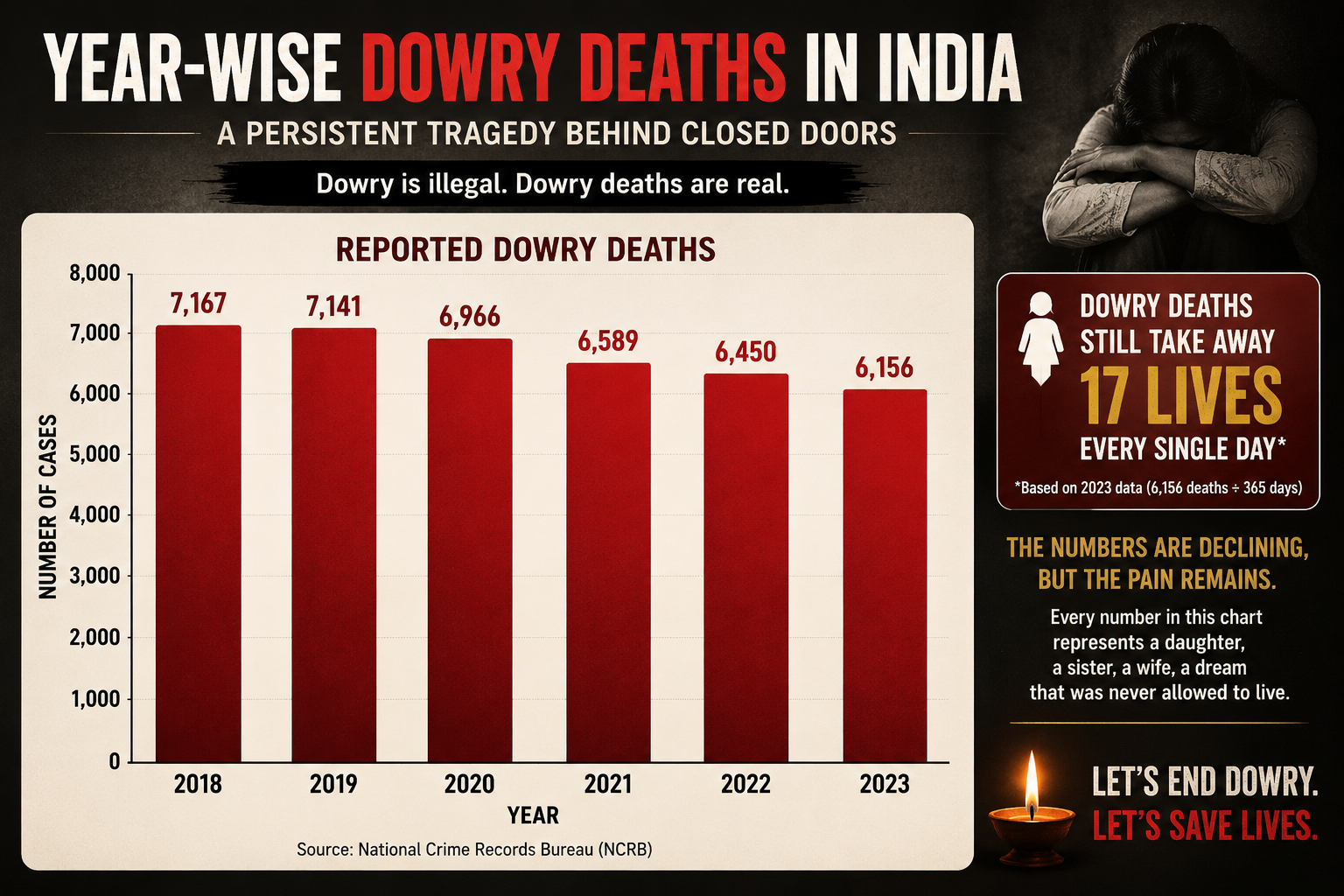
Although the numbers show a gradual decline, the reality remains alarming. This still means that many women lose their lives every single day in cases connected to dowry harassment and marital abuse. Experts and activists have repeatedly pointed out that many cases may also go unreported or be recorded under different categories, which means the real scale of the issue could be even larger.
Why Public Trust Is Weakening
One of the biggest concerns seen in public reaction is distrust toward institutions. Many people fear that powerful families, legal influence, or delays in investigation may weaken justice. This feeling has become common in several high-profile cases involving women’s deaths after marriage. Public anger is no longer only directed at individuals; it is increasingly directed at systems that people believe fail women repeatedly.
Another major issue is victim-blaming. Many people strongly oppose attempts to shift focus away from the investigation by discussing a woman’s personal life, mental health, or character without evidence. Public conversations now show a growing awareness that women facing harassment are often isolated, emotionally pressured, and unable to seek help freely.
A Larger Social Warning
The Twisha case has become a reminder that dowry is not only about money or gifts—it is also about control, pressure, social status, and power inside marriage. While urban lifestyles and modern education have changed many parts of Indian society, dowry-related expectations continue to exist in both direct and indirect forms.
Public reaction clearly shows that people are tired of seeing repeated stories of young women dying under suspicious circumstances soon after marriage. Many now believe stronger laws alone are not enough. There is growing demand for faster investigations, stricter accountability, better support systems for women, and a deeper social change in how marriage and family pressure are understood.
The Road Ahead
The emotional response to the Twisha case reflects a much bigger national concern about women’s safety and dignity after marriage. People are not only demanding justice for one woman; they are demanding that such cases stop becoming common headlines. The case has reopened uncomfortable but necessary conversations about dowry, domestic abuse, social pressure, and the failure to protect women inside their own homes.
The public message is becoming louder and clearer: justice cannot depend on influence, silence, or delay. Cases like Twisha’s are no longer seen as private family matters—they are being seen as a social crisis that India can no longer ignore.
How do you feel about this story?