BNN Summary
From Traditional Fuels to LPG Dependence For generations, the Indian kitchen ran on patience as much as on fuel. Before LPG became common, many households cooked on coal, firewood, cow-dung…
In-Depth Analysis
From Traditional Fuels to LPG Dependence
For generations, the Indian kitchen ran on patience as much as on fuel. Before LPG became common, many households cooked on coal, firewood, cow-dung cakes, and kerosene stoves. Those methods were familiar, but they were also smoky, time-consuming, and physically demanding. Even as late as 2009–10, firewood remained the main cooking fuel for 76.3% of rural households, while LPG was the primary fuel for only 11.5%; in urban India, though, LPG had already become the main cooking fuel for 64.5% of households. Over the years, and especially after the launch of the Pradhan Mantri Ujjwala Yojana in 2016, LPG stopped being just a modern convenience and became part of the basic rhythm of Indian household life. The PMUY portal says more than 105.6 million LPG connections had been released under the scheme as of March 10, 2026.
Why the Current LPG Disruption Feels Personal
That is why the current LPG disruption has felt so personal. A cooking gas cylinder is not like some distant commodity whose price flashes across business pages. In India, it sits in the corner of the kitchen, under the pressure cooker, beneath the morning chai, behind the tiffin packed for school, office, or a train journey. When LPG supply becomes uncertain, the anxiety is immediate and domestic. The question is not merely economic. It is intimate: gas kab aayegi?
Social Media as a Mirror of Public Emotion
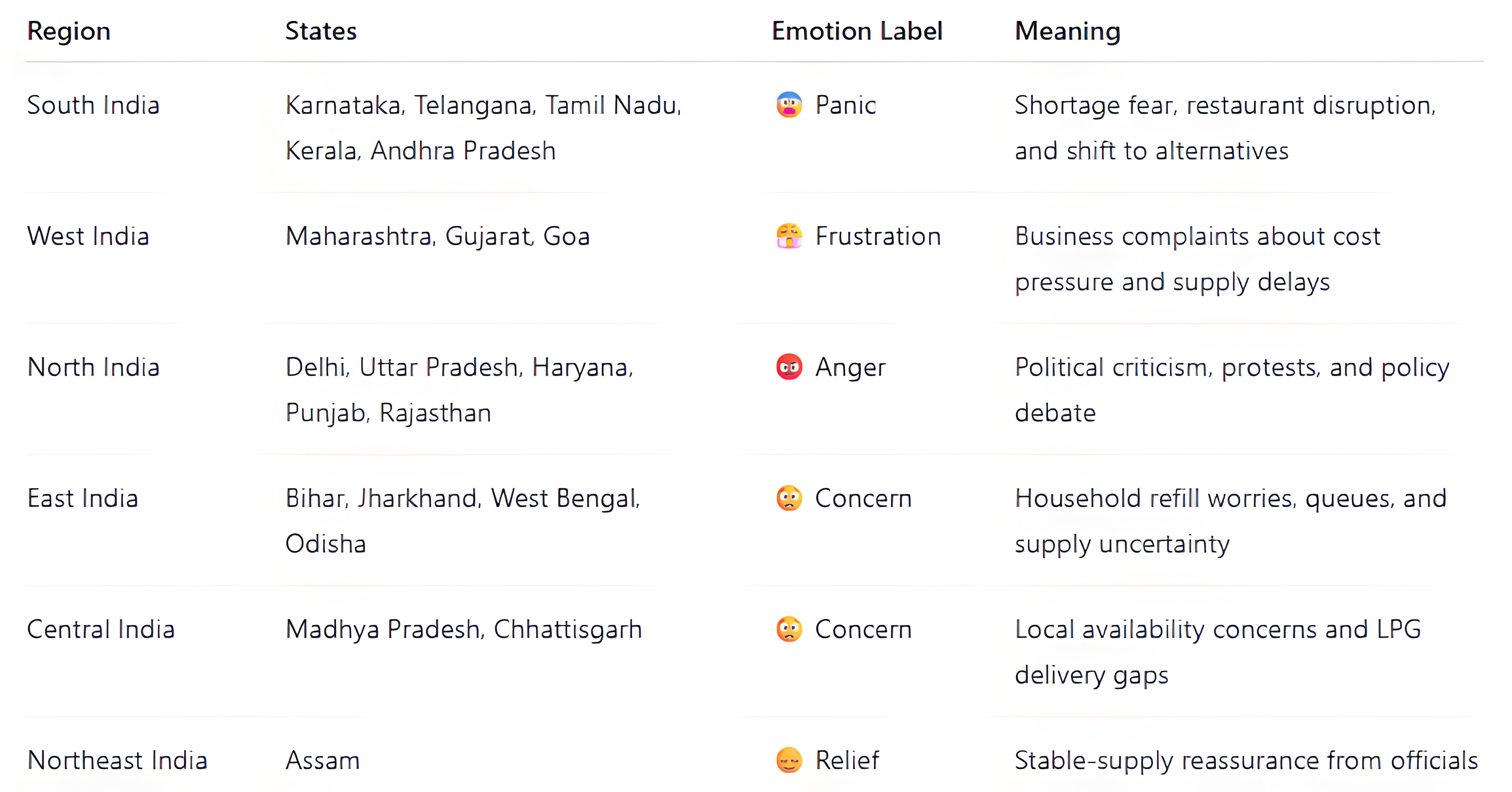
Social media has captured that intimacy better than any official statement could. On X, Instagram, and Facebook, the reactions have not been abstract debates about energy logistics. They have been deeply human responses: panic over delayed refills, anger over policy and pricing, frustration from restaurant owners, concern from households, and relief where supply appears stable. Recent reporting across states shows long queues, delayed deliveries, temporary restaurant closures, rationing of fuel, and even shifts to alternatives such as induction cooking or firewood.
Panic and Public Mood in Andhra Pradesh
In Andhra Pradesh, especially around Vijayawada and Tirupati, social media reaction has taken the form of panic. That emotion is easy to understand. Reports describe residents crowding agencies, eateries suspending operations, and businesses turning to domestic cylinders or firewood as commercial LPG became harder to secure. Once such images begin circulating online, the shortage becomes more than a supply issue; it becomes a public mood. One person posts a queue, another posts an unavailable booking slot, a third shares rumors of rising prices, and together they create a collective sense of alarm. In that atmosphere, “gas kab aayegi?” becomes less a practical question and more a cry of uncertainty.
Economic Pressure in Karnataka and Maharashtra
In Karnataka and Maharashtra, the strongest online emotion has been frustration mixed with anxiety. The reason is that LPG is not only a household fuel there; it is also an economic lifeline for restaurants, caterers, tea stalls, and small food businesses. Reports from Bengaluru, Mumbai, and Pune describe eateries scaling down operations, pausing service, trimming menus, and warning of shutdowns as commercial LPG shortages worsened. Social media in these places reflects the stress of livelihoods under pressure. The posts are not only about inconvenience. They are about wages, customer loss, and the fear that a temporary disruption can become a financial blow. For many small operators, a missing cylinder means a missing day’s income.
Households and Street Economy: A Shared System
This is where the story of the Indian household meets the story of the Indian street economy. The same LPG system that fuels home kitchens also sustains neighborhood canteens, roadside stalls, wedding caterers, and lunch providers. When commercial supply tightens, households start worrying not only about their own kitchens but about the wider ecosystem around them: the local idli shop, the tea seller downstairs, the dhaba on the highway, the cook preparing food for a wedding. Social media captures this interdependence vividly. The household and the market are not separate worlds. They are connected by the same flame.
Anger and Political Debate in North India
In North India, particularly in Delhi and surrounding areas, the social-media mood has tilted more toward anger. That is partly because fuel in India is never only a utility issue; it is always political. Reports from Delhi-NCR describe small food vendors raising prices as cylinder shortages hit, while broader coverage of the LPG disruption has fueled criticism, blame, and debate. Online, this shows up in political posts, memes, accusations, and arguments over whether the crisis is being exaggerated, mishandled, or unfairly borne by ordinary people. Anger in this context is not just ideological. It grows out of everyday inflation fatigue. When people already feel squeezed by costs, any disruption to cooking gas becomes one more sign that the burden is always falling on the same households.
Quiet Concern Across Other Regions
Elsewhere, especially in parts of eastern and central India, the dominant tone is concern rather than open panic or anger. Concern is quieter, but no less real. It lives in refill delays, worried conversations, and the practical calculations households make when essentials become uncertain. Can the current cylinder last three more days? Should food be cooked once instead of twice? Is it time to pull out the old stove, the hot plate, the backup plan? Social media may dramatize crises, but it also reveals the small adjustments families make when systems wobble. In that sense, it is a window into domestic resilience as much as domestic fear.
Assam and the Role of Clear Communication
The Northeast offers an important contrast. In Assam, authorities and oil companies publicly clarified that there was no shortage of domestic LPG, even if commercial filling had been affected. That kind of communication matters. Where official messaging aligns with people’s lived experience, social-media reaction tends to calm down. Relief becomes possible. The lesson is simple: confidence is part of supply management. A cylinder delivered late can cause inconvenience; a rumor left unchallenged can cause panic at scale.
Trust in the LPG System Under Question
The larger issue, then, is not only whether India has enough LPG in the system. It is whether households trust that the system will work when they need it. That trust has been built over decades, from the smoky kitchens of wood and kerosene to the cleaner promise of LPG. For millions of families, the cylinder came to stand for progress: less smoke, less drudgery, quicker cooking, better health, greater dignity. That is why the present disruption feels like more than a logistical problem. It feels like a challenge to a hard-won normal.
What Social Media Reveals About Daily Life
And that is exactly what social media has laid bare. Behind every viral complaint, every anxious post, every angry thread, and every reassuring update is the same ordinary domestic truth: in India, LPG is not just fuel. It is breakfast before school, lunch packed for work, dinner after a long commute, tea for a guest, food for a festival, and income for those who cook for others. So when the country asks, “gas kab aayegi?”, it is not asking only about delivery. It is asking when certainty will return to the Indian kitchen.
Why the LPG Crisis Truly Matters
That is why the LPG crisis matters. Not because it has produced dramatic headlines alone, but because it has reminded the country how central the kitchen remains to public life. The reactions online, from panic to relief, are not exaggerated emotions. They are evidence of how deeply this single household object, the gas cylinder, is tied to security, routine, and trust. In the end, social media has not distorted the crisis. It has translated it into the language ordinary Indians understand best: the language of the home.
How do you feel about this story?