
Image: Wikipedia
BNN Summary
Rahul Gandhi has released the audio of his June 8 I.N.D.I.A. bloc speech, where he accuses the Bharatiya Janata Party (BJP) of systematically capturing key democratic institutions. Gandhi emphasized that his alliance partners may be underestimating the profound extent of the BJP's influence and control over these vital structures, signaling a serious challenge to India's democratic framework and a call for a more robust opposition strategy.
In-Depth Analysis
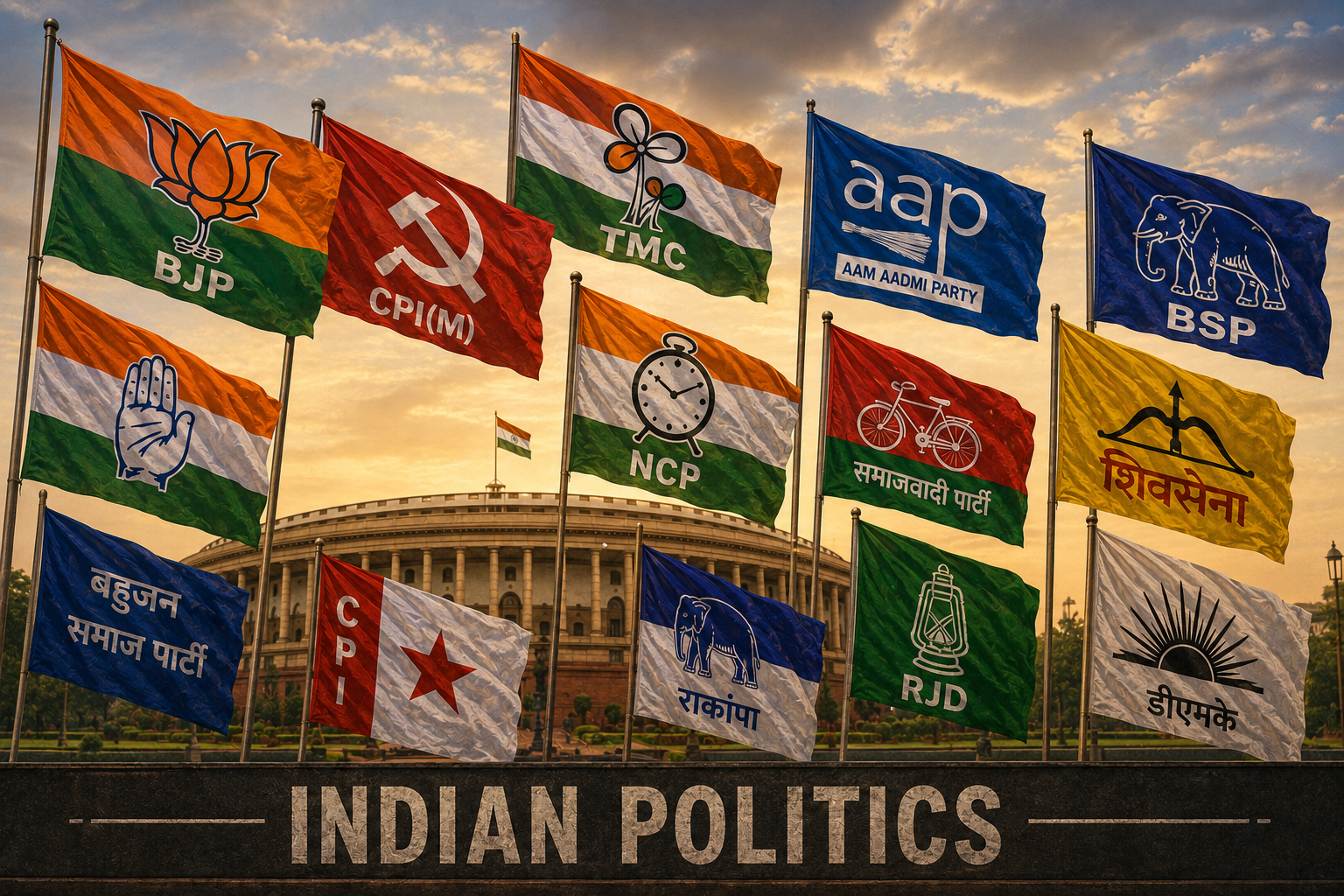
New Delhi – In a significant move reverberating through India's political landscape, Congress leader Rahul Gandhi has publicly released the audio recording of his June 8 speech delivered to the I.N.D.I.A. (Indian National Developmental Inclusive Alliance) bloc. The release underscores Gandhi's persistent and grave accusations against the ruling Bharatiya Janata Party (BJP) for allegedly undermining democracy by systematically seizing control of the nation's pivotal institutions. This bold step aims to amplify his warnings, particularly to his alliance partners, whom he believes are underestimating the deep-seated hold the BJP has established over various pillars of governance and public life.
During his address, which has now become a point of extensive political discourse, Gandhi reportedly articulated a stark assessment of the BJP's alleged strategy. He contended that the saffron party has not merely gained political power through electoral victories but has, over time, meticulously extended its influence into areas traditionally seen as independent and impartial. These institutions, according to Gandhi, include segments of the judiciary, the election commission, investigative agencies, and even significant portions of the media. The implied message is that such pervasive control creates an uneven playing field, potentially compromising the integrity of democratic processes and the checks and balances essential for a healthy democracy.
A central theme of Gandhi's message to his I.N.D.I.A. bloc allies was a call for a more profound understanding and acknowledgment of this alleged institutional capture. He reportedly warned that a failure to recognize the full scope of the BJP's influence could lead to misguided strategies and an inability to effectively counter the ruling party. This suggests an internal critique within the alliance, urging its constituents to move beyond conventional political competition and confront what Gandhi perceives as a structural assault on democratic norms. The implication is that without addressing the foundational weakening of institutions, opposition efforts, no matter how robust electorally, might face insurmountable systemic hurdles.
Gandhi's concerns resonate with a broader debate among political analysts and civil society groups regarding the health of India's democratic institutions. Critics have often pointed to instances where they believe independent bodies have acted in ways perceived to be favorable to the government, leading to questions about their autonomy. The BJP, for its part, has consistently dismissed such allegations, asserting that its actions are within constitutional bounds and aimed at good governance, and that the opposition's claims are merely an attempt to discredit a democratically elected government. They often argue that strengthening institutions is a continuous process and that the opposition's narrative is a reflection of their electoral frustrations.
The decision to release the audio of a speech made within the confines of an alliance meeting is strategically significant. It transforms an internal deliberation into a public statement, allowing Gandhi's specific concerns to reach a wider audience beyond the I.N.D.I.A. bloc's immediate leadership. This could be interpreted as an effort to rally public opinion, build a stronger narrative against the BJP, and perhaps even to exert pressure on his own allies to adopt a more aggressive stance on the issue of institutional integrity. It also brings transparency to internal discussions, reinforcing Gandhi's commitment to challenging what he views as an existential threat to Indian democracy.
In the grander scheme, Gandhi's allegations and the subsequent public release of his speech audio highlight the ongoing ideological and political battle for the soul of India's democracy. The I.N.D.I.A. bloc, formed with the primary objective of presenting a united front against the BJP in the upcoming elections, faces the complex task of not only electoral coordination but also of formulating a cohesive response to fundamental questions about governance, accountability, and institutional independence. Gandhi's latest move serves as a powerful reminder of the high stakes involved and the imperative for all stakeholders to critically assess the state of democratic institutions in the nation. The dialogue sparked by this audio release is expected to intensify the political discourse in the coming weeks, potentially shaping the opposition's strategy and the public's perception of the current political climate.
How do you feel about this story?