
BNN Summary
The journey of the Bharatiya Janata Party (BJP) over the past 47 years stands as one of the most remarkable success stories in Indian politics. From a modest beginning in 1980 to becoming the most dominant political force in the country, the BJP’s rise reflects resilience, strategic leadership, and a strong ideological foundation.
In-Depth Analysis
The journey of the Bharatiya Janata Party (BJP) over the past 47 years stands as one of the most remarkable success stories in Indian politics. From a modest beginning in 1980 to becoming the most dominant political force in the country, the BJP’s rise reflects resilience, strategic leadership, and a strong ideological foundation.
The origins of the BJP can be traced back to the Bharatiya Jana Sangh, founded by Syama Prasad Mukherjee in 1951. After the Emergency in India, opposition parties united to form the Janata Party. However, ideological differences led to its collapse, and in 1980, the BJP was formally established under leaders like Atal Bihari Vajpayee and Lal Krishna Advani.
In its early years, the BJP struggled to gain political ground. The party faced a major setback in the 1984 general elections, winning only two seats in the Lok Sabha. However, this phase of adversity helped the party reorganize and redefine its ideology. Moving away from its initial moderate stance, the BJP embraced cultural nationalism, which resonated with a larger section of the population.
The late 1980s and 1990s marked a turning point in the BJP’s growth. The party gained widespread support through movements like the Ram Janmabhoomi movement, with Lal Krishna Advani leading the influential Rath Yatra. As a result, the BJP rapidly increased its presence in Parliament and emerged as a major national party.
The BJP’s first significant opportunity to govern came in the late 1990s. Under the leadership of Atal Bihari Vajpayee, the party led the National Democratic Alliance government. This period was marked by key achievements such as the Pokhran-II nuclear tests, infrastructure development through the Golden Quadrilateral project, and economic reforms. Vajpayee’s leadership helped establish the BJP as a capable and responsible governing party.
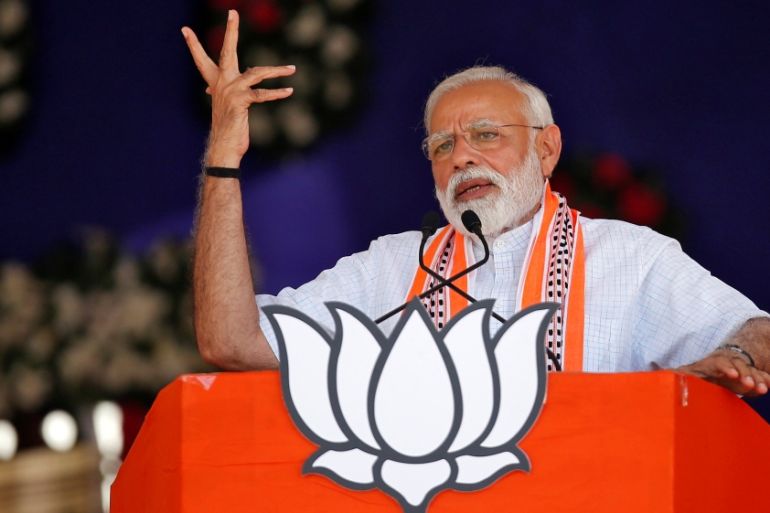
After losing power in 2004, the BJP spent a decade in opposition. During this time, it focused on strengthening its organizational structure and expanding its influence across states. This groundwork proved crucial for its return to power in 2014 under the leadership of Narendra Modi. The BJP secured a historic majority, which it further strengthened in the 2019 elections.
In recent years, the BJP government has implemented several significant policies, including the Goods and Services Tax, Demonetisation, and the Abrogation of Article 370. These decisions, along with welfare schemes and a strong focus on national identity, have contributed to the party’s widespread appeal.
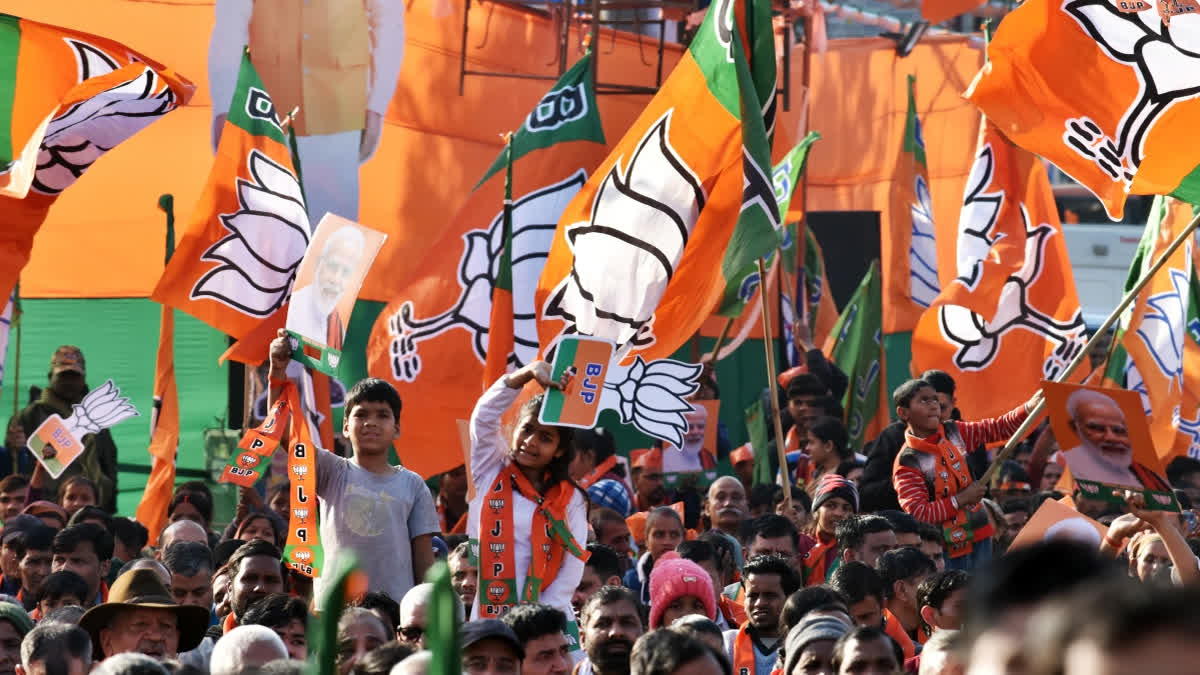
The success of the BJP can be attributed to several key factors. Its strong ideological base, backed by organizations like the Rashtriya Swayamsevak Sangh, has ensured consistency and discipline. Effective leadership, from Vajpayee’s inclusive approach to Modi’s mass connect, has played a crucial role. Additionally, the party’s robust grassroots network and modern communication strategies have helped it reach millions of voters.
In conclusion, the 47-year journey of the Bharatiya Janata Party is a story of perseverance, transformation, and political mastery. From winning just two seats to achieving a dominant position in Indian politics, the BJP has redefined the political landscape of the nation. Its journey continues to shape the future of India’s democracy.
BJP from 2014 to 2026: An Era of Political Dominance
The period from 2014 to 2026 marks the most significant and transformative phase in the history of the Bharatiya Janata Party (BJP). During these years, the party not only achieved repeated electoral success but also reshaped India’s political, economic, and social landscape under the leadership of Narendra Modi.
The turning point came in 2014, when the BJP secured a historic victory in the general elections by winning an absolute majority in the Lok Sabha. This was the first time in three decades that a single party had achieved such a mandate. Narendra Modi, who had served as the Chief Minister of Gujarat, became the Prime Minister. His campaign focused on development, good governance, and anti-corruption, which resonated strongly with the electorate. This victory marked the beginning of a new era in Indian politics characterized by strong and centralized leadership.
During its first term from 2014 to 2019, the BJP government introduced several key reforms and welfare schemes aimed at transforming the economy and improving the lives of citizens. One of the most notable decisions was the Demonetisation in 2016, which aimed to curb black money and promote digital transactions. Another major reform was the introduction of the Goods and Services Tax in 2017, which unified the country’s indirect tax system into a single framework. Alongside these, schemes such as financial inclusion programs, rural electrification, sanitation drives, and free LPG connections for poor households significantly expanded the government’s outreach and impact.
In 2019, the BJP returned to power with an even stronger mandate, winning more seats than in 2014. This victory reflected public confidence in the leadership of Narendra Modi and the government’s policies. The second term witnessed several bold and controversial decisions. Among them was the Abrogation of Article 370, which revoked the special status of Jammu and Kashmir and integrated it more fully into the Indian Union. The passage of the Citizenship Amendment Act also sparked widespread debate and protests across the country.
The BJP government also faced significant challenges during this period, most notably the global outbreak of COVID-19. The government implemented strict lockdowns, economic relief measures, and one of the world’s largest vaccination drives to combat the crisis. While the handling of the pandemic drew both praise and criticism, it tested the government’s administrative capabilities on an unprecedented scale.
Another major episode during this period was the introduction of agricultural reforms, commonly known as the Farm Laws. These laws led to widespread protests by farmers and were eventually repealed in 2021, demonstrating the government’s willingness to respond to public pressure.
From 2024 to 2026, the BJP continued its political dominance by returning to power once again, leading the National Democratic Alliance. The government maintained its focus on economic growth, infrastructure development, digital transformation, and national security. Initiatives promoting manufacturing, technological innovation, and global engagement strengthened India’s position on the world stage. At the same time, cultural and religious initiatives, including developments related to Ayodhya, played an important role in shaping the party’s identity and support base.
The success of the BJP during this period can be attributed to several key factors. Strong leadership under Narendra Modi, an effective blend of welfare policies and nationalism, a robust organizational structure supported by the Rashtriya Swayamsevak Sangh, and the strategic use of communication and technology have all contributed to its sustained popularity.
In conclusion, the years from 2014 to 2026 represent a defining chapter in the journey of the Bharatiya Janata Party. The party not only achieved consistent electoral success but also implemented wide-ranging reforms and navigated complex challenges. This era has had a profound impact on India’s political landscape and will continue to influence the country’s future trajectory.
Dr K. Venkatakrishna Rao, Assistant Professor, NIT Warangal and Visiting Fellow, India Foundation, New Delhi.
How do you feel about this story?
Discussion
No comments yet. Be the first to share your thoughts.
Join the discussion
Sign in to share your thoughts on this story.