
BNN Summary
Former Indian cricketer and current Rajya Sabha MP Harbhajan Singh found himself at the center of a political storm in Punjab after the Aam Aadmi Party (AAP) publicly accused him of acting as a mouthpiece for the Bharatiya Janata Party (BJP). Singh swiftly delivered an "explosive reply," which reportedly silenced his critics and intensified the ongoing political discourse in the state. The exchange highlights the volatile nature of Punjab’s political landscape.
In-Depth Analysis
Afresh political controversy has erupted in Punjab, drawing national attention as the ruling Aam Aadmi Party (AAP) launched a scathing attack on former Indian cricketer and prominent Rajya Sabha MP, Harbhajan Singh. The AAP publicly labeled Singh as the “BJP’s parrot,” a highly charged accusation implying that the revered sports personality turned politician was merely echoing the sentiments and agenda of the Bharatiya Janata Party (BJP). This allegation immediately sparked a strong reaction across the political spectrum, further heating up the already dynamic political environment in Punjab.
The phrase “BJP’s parrot” is a significant one in Indian political discourse, often employed to suggest that an individual is not acting independently but rather as a mouthpiece or an agent for another political entity. Such an accusation, especially when directed at a public figure of Harbhajan Singh’s stature, aims to undermine their credibility and question their impartiality. Given Singh’s celebrated career as an international cricketer, his transition into politics as a Rajya Sabha MP has been closely watched, and any perceived alignment with a specific political party beyond his official parliamentary role can invite intense scrutiny and debate. The AAP’s decision to use such strong language indicates a deliberate attempt to corner Singh politically and, by extension, to challenge any growing influence of the BJP within Punjab, a state where AAP currently holds power.
However, the AAP’s aggressive stance was met with an equally powerful and decisive counter-response from Harbhajan Singh. Reports indicate that Singh delivered an “explosive reply” that effectively “silenced” his critics. While the specific words of his retort have not been widely detailed, the impact of his response suggests a firm denial of the allegations and possibly a strong counter-challenge to the AAP’s claims. In the arena of Indian politics, public figures often resort to robust defenses, emphasizing their independence, integrity, and commitment to their constituents when faced with such accusations. An “explosive reply” typically involves not just a simple denial but a comprehensive rebuttal that may include questioning the motives of the accusers, highlighting their own political inconsistencies, or reaffirming one's autonomous political standing. This swift and impactful response from Singh underscored his unwillingness to be easily swayed or discredited by partisan attacks, asserting his position as an independent voice in the Rajya Sabha.
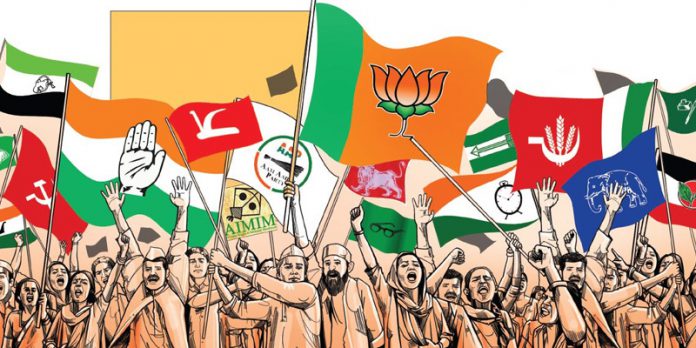
The timing and nature of this political spat are particularly noteworthy given Punjab’s intricate political landscape. The state has historically been a hotbed of intense political rivalries, and with AAP at the helm, it frequently witnesses sharp exchanges between the ruling party and opposition forces. The BJP, a national party, has been actively working to consolidate its base and expand its influence in Punjab, a state where regional parties and alliances have traditionally held sway. Therefore, any public figure, especially an MP like Harbhajan Singh, who is perceived to be leaning towards or being influenced by the BJP, can become a focal point in the ongoing power struggles.
This incident also highlights the evolving role of celebrities and public figures in Indian politics. When prominent personalities from fields like sports or entertainment enter the political arena, they bring with them a massive fan base and a pre-established public image. However, this also makes them susceptible to heightened scrutiny and political targeting. Their past achievements, while contributing to their political capital, can also be leveraged by opponents to question their political actions or allegiances. Harbhajan Singh’s situation is a classic example of how a celebrated non-political background converges with the often-combative world of politics, leading to such headline-grabbing controversies.
The exchange between AAP and Harbhajan Singh will undoubtedly fuel further political debates and discussions within Punjab. It serves as a reminder of the robust, and at times acrimonious, nature of democratic discourse in India. Such incidents shape public perception, influence voter sentiment, and contribute to the broader narrative of political accountability and rivalry. As Punjab prepares for future electoral contests, these kinds of skirmishes involving high-profile individuals will continue to be a significant feature of its political landscape, underscoring the constant interplay between power, perception, and public image in the Indian political sphere.
How do you feel about this story?